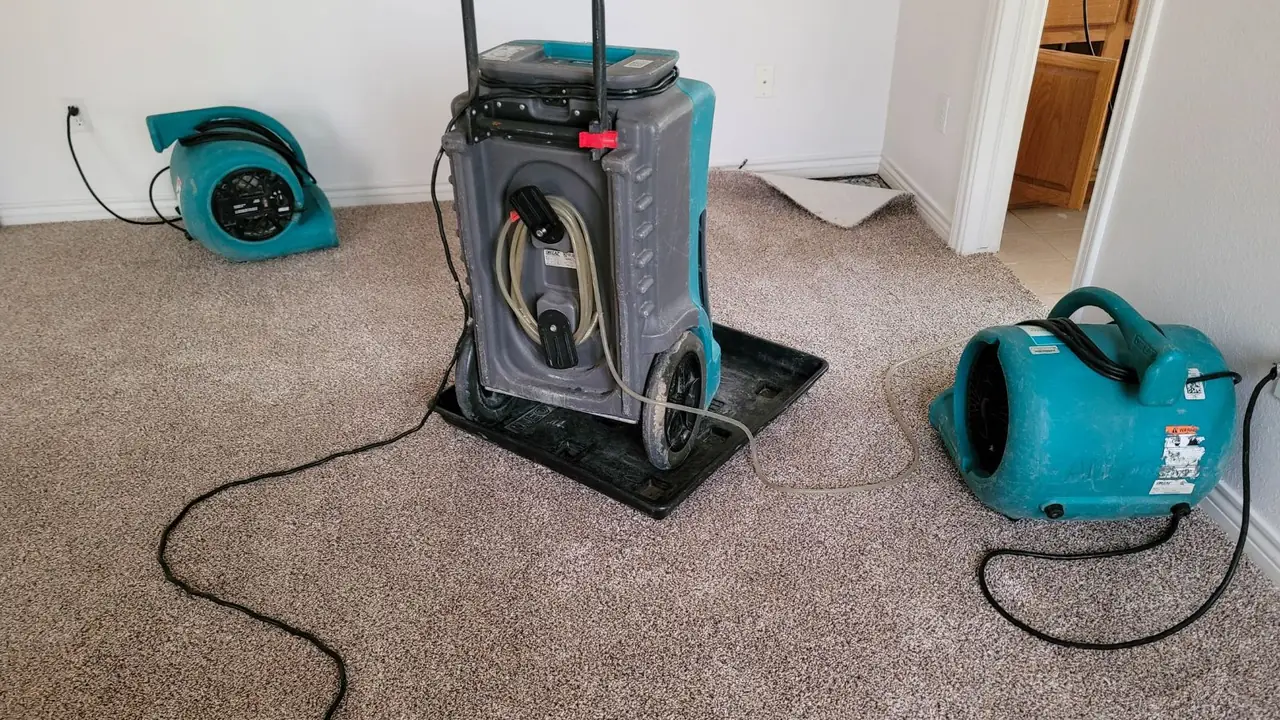
Your air conditioner pulls moisture out of the air and sends it down a condensate drain line. When algae or debris clogs that line, the drain pan overflows and water leaks into the ceiling, the closet around the air handler, the attic floor or the flooring below. Switch the system off at the thermostat, clear the line or call an HVAC technician, and start drying before the wet materials turn into a mold project.
If the ceiling is dripping or sagging now, call the 24/7 line while you read. Stop the water, then dry the materials. Both steps matter.
Signs a Condensate Line Is Leaking
- A brown or yellow stain that appears on a ceiling below an attic air handler or inside a closet that houses one.
- Water in the secondary drain pan, or a float switch that has shut the system off.
- A musty smell near the air handler even when the system is running normally.
- Warped baseboard or a soft spot in drywall near a closet that holds the unit.
- A system that stops cooling and will not restart, because many units have a safety switch that trips when the pan fills.
Callers who report this problem often describe a wet spot in a closet or on a bathroom ceiling, then discover the cause upstairs. If the stain keeps growing, treat it as an active leak.
First Steps, in Order
What to do right now
- Set the thermostat to off. This stops new condensate from forming.
- If water is near the air handler, an electrical panel or outlets, do not touch anything. Shut off power at the panel only if you can reach it dry, and call the utility or 911 for any electrical risk before the restoration line.
- Clear standing water in the pan with a wet vacuum if it is safe to reach.
- Place buckets or towels under active drips. If a ceiling bulges with water, poke a small hole at the lowest point to release it into a bucket, staying out from under it.
- Photograph everything, then call an HVAC technician to clear the line and the 24/7 line for drying.
Water is still spreading or you need an inspection? Call the 24/7 line and talk to a dispatcher now.
☎ (817) 623-9267Where the Water Goes
Condensate overflow is usually spread out. It drips through insulation, wets the top of the drywall and soaks into the ceiling below. In a closet, it can wick into baseboard and carpet. On an attic floor, it can sit in the insulation for days before it shows downstairs.
Because the water is clean at first, many people wait. That is a mistake. Insulation and drywall hold water, and the longer they stay wet, the more likely the leak becomes a mold remediation job. Mold needs moisture, and the Texas Department of Licensing and Regulation recommends keeping indoor humidity at or below 50 percent with air conditioning or a dehumidifier.
How Drying Works for This Kind of Leak
A crew starts by finding the wet area with a moisture meter and a thermal camera. Wet insulation is removed, since it dries slowly. Sagging or soaked drywall is cut out, and air movers and dehumidifiers dry what remains. In a ceiling, a small cut can let air reach the cavity above.
Readings are logged on the first visit and every visit after. When the wet materials return to a normal range, the equipment goes out. Rebuilding then starts with new insulation, drywall, texture and paint. The early drying phase is covered under water mitigation.
| Wet material | Typical response | Reason |
|---|---|---|
| Attic insulation under the drain pan | Usually removed and replaced | It holds water and dries slowly |
| Drywall ceiling below | Dried if firm, cut out if sagging or stained through | Soft paper facing can fail and grow mold |
| Closet baseboard and carpet | Baseboard lifted, carpet and pad removed if soaked | Padding stays wet for days |
| Hardwood or laminate near the closet | Dried with mats or lifted at the edges | Water slips under the boards |
| Air handler platform or framing | Checked with a meter, dried or replaced | Wood framing can stay wet unseen |
Stop It From Coming Back
Ask your HVAC technician to flush the line and add a float switch or an additional drain access point. Many drain lines get a cleaning tablet or a vinegar flush on a schedule, but the best habit is to check the pan and the line before and after the heavy cooling season. A float switch costs far less than a ceiling.
Flower Mound note: sudden versus gradual
The Texas Department of Insurance says most homeowner and renter policies cover sudden and accidental water damage, while gradual leaks and seepage are generally excluded, including mold they cause. A drain pan that overflows in one weekend is easier to describe as sudden than a line that has dripped for months.
That is why the first photograph matters. Show the date, the pan, the drip and the stain. If your loss sits in the 75022 or 75028 area, in Argyle or in Lewisville, the same documentation rules apply. Ask your insurer how your policy treats a slow leak before you decide how much to repair.
Cost Factors
The price for a condensate leak depends on how long it ran, how much insulation and drywall are wet, whether flooring below is affected, how many drying days the readings require and what rebuild scope follows. Call the line and a dispatcher will explain how scope and price are set before work starts. If the water traveled far, emergency water removal may be the first step.
Frequently Asked Questions
The most common cause is a clogged condensate drain line. When it backs up, the drain pan overflows. A cracked pan or a poorly sloped line can cause the same result.
Turn the system off at the thermostat until the line is cleared. Running it adds more water to a pan that cannot drain.
Mold needs moisture, and wet insulation, drywall and baseboard give it a place to grow if they stay damp. Drying quickly and keeping humidity at or below 50 percent are the practical steps.
Texas Department of Insurance guidance says sudden and accidental water damage is generally covered and gradual leaks are generally excluded. Your policy wording decides, so ask your insurer.
Yes, the 24/7 line takes calls at night and on weekends, with same-day response when available. Switch off the thermostat and call.
Both. The HVAC technician fixes the cause and the restoration crew dries the structure. If water is actively spreading, start drying right away.