Water damage repair in Flower Mound, TX is the rebuild stage that follows drying. It replaces the drywall, insulation, flooring, trim and paint that water ruined, and it begins only after moisture readings confirm the structure is dry. Call the 24/7 line and a dispatcher will connect you with licensed and insured restoration professionals who can walk the damage, write the scope and explain the price before any work starts.
Most homeowners meet this stage in the middle of a bigger problem. A pipe let go, a roof leaked or an appliance failed, the water was dealt with, and now a ceiling sags or a floor has lifted. If the water is still moving, start with emergency water removal instead, because rebuilding over wet framing only hides the next failure.
What Repair Covers and What It Does Not
Repair is the carpentry, finish and flooring work. It is separate from extraction, drying and cleanup, which are covered under water mitigation and water damage cleanup. Keeping the stages separate matters because each has its own scope, its own price and its own proof of completion.
A typical repair scope for one affected room has five parts. The crew confirms dry readings, removes any remaining damaged material, rebuilds the wall, ceiling or floor assembly, then primes and paints. Trim, baseboard and texture matching come last, and they take the longest to look right.
| Material | What water does to it | Usual repair decision |
|---|---|---|
| Drywall (1/2 inch) | Softens, sags, stains and can wick water upward | Cut out wet sections, replace if dry-in-place fails the moisture check |
| Insulation | Compresses and holds water against framing | Remove wet batts, replace once framing reads dry |
| Solid hardwood | Cups, crowns or buckles as it absorbs water | Dry first, then sand and refinish or replace boards |
| Laminate and vinyl plank | Edges swell and seams open | Replace affected planks, check the subfloor beneath |
| Carpet and pad | Pad holds water and odor | Pad is usually replaced, carpet only if clean and dried fast |
| Baseboard and trim | Swells, delaminates and peels paint | Replace, then caulk and repaint |
Signs the Damage Needs Repair, Not Just Drying
- A ceiling stain with a soft or sagging center that stays after the area feels dry.
- Drywall that crumbles at the bottom edge, or paint that bubbles and peels in sheets.
- Floorboards that cup along the edges or feel springy underfoot.
- Baseboards that have swollen away from the wall.
- A musty smell that returns on humid days even after the surface looks clean.
Any of these can also mean water is still present behind the surface. A moisture meter and a thermal camera settle the question in minutes, and a good repair crew checks both before cutting anything. If readings are high, the right next step is drying, not patching.
How a Ceiling and Wall Repair Is Done
A water-stained ceiling usually traces back to an upstairs bathroom, an attic line or a roof leak. The crew opens the damaged section back to dry, solid drywall, usually along the nearest framing line so the new panel has something to screw into. Insulation above is checked and replaced if it is wet.
New drywall goes in with fasteners set just below the surface, then taped and mudded in thin coats. Each coat needs to dry before sanding, which is why a ceiling patch takes more than one visit. Texture is matched last, and stain-blocking primer goes on before paint so the old stain does not bleed through the new finish.
Ready to have the damage looked at? Call the 24/7 line and ask for a repair assessment.
☎ (817) 623-9267Flooring Repair After a Leak
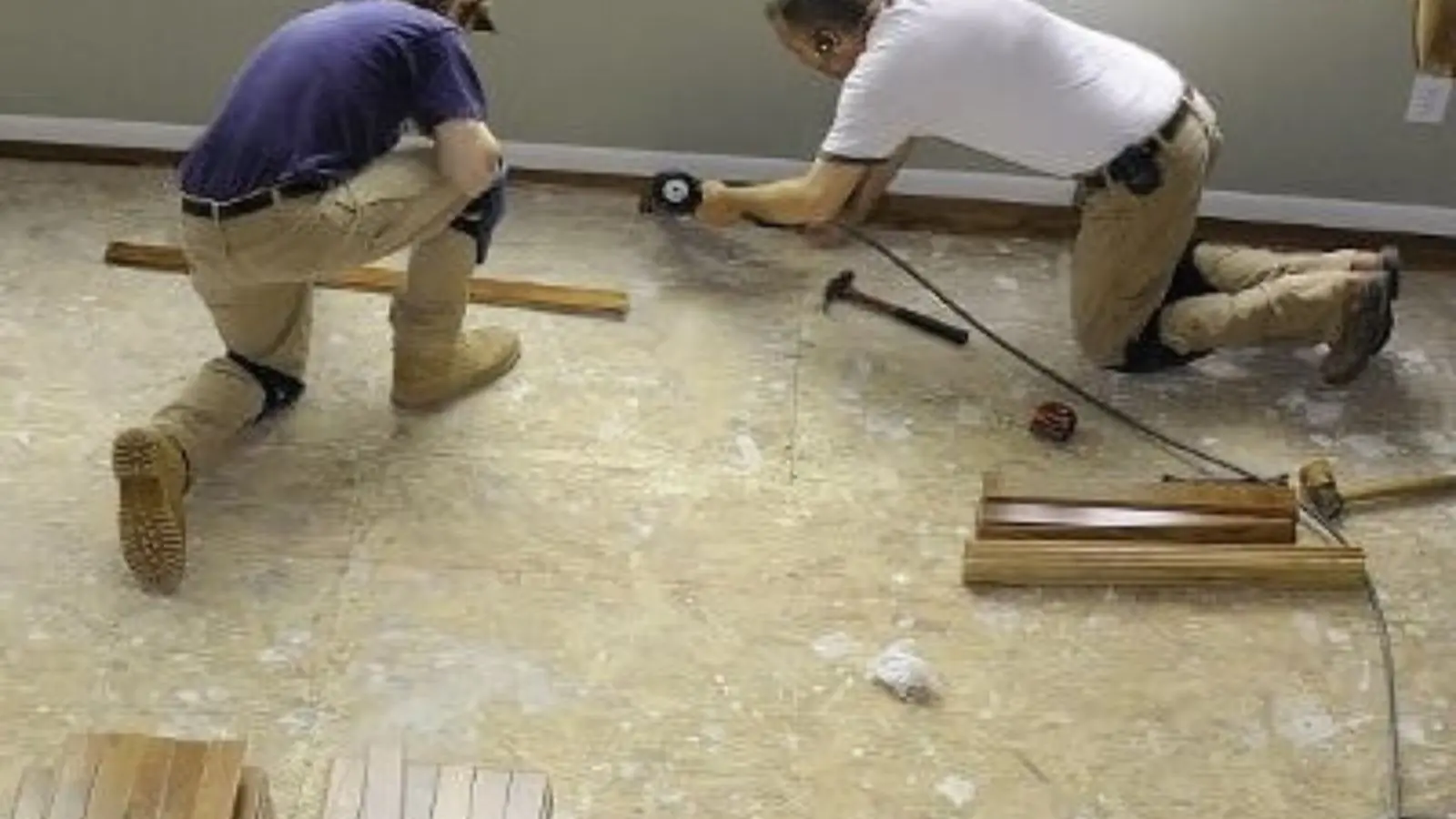
Flooring repair depends on how long the material stayed wet and what it is made of. Engineered and solid hardwood can often be dried with mats and panels if the water is caught early, while laminate with swollen edges rarely recovers. Slow leaks from a refrigerator line or a washer valve tend to ruin the subfloor edge before anyone sees a stain.
The crew checks the subfloor with a meter, pulls a few boards or planks to look underneath, then decides between a partial and full replacement. Matching an existing finish is often the hardest part, so ask how the crew plans to blend the new boards with the old before you approve the scope.
What Affects the Price of Water Damage Repair
No honest repair price can be given before someone sees the damage. These are the factors that move it most:
- Water category: clean supply water, gray water or sewage changes what must be removed.
- Affected area: one ceiling patch is a different job from three rooms of drywall.
- Materials: hardwood, tile and custom cabinets cost more than carpet and standard drywall.
- Drying time and equipment already used: a structure that dried quickly needs less removal.
- Rebuild scope: paint to the corner, texture matching and trim all add labor.
Dispatch explains the scope and price before work starts, and you can compare it with what your insurer will cover. For the real number on your damage, call the 24/7 line.
Repair and Your Insurance Claim
The Texas Department of Insurance says most homeowner and renter policies cover sudden and accidental water damage, such as a burst pipe or a broken washer hose. Gradual leaks and seepage are generally excluded, so check your policy or ask your insurer before assuming a repair is covered.
TDI also advises photographing or filming the damage before repairs, keeping damaged items until the adjuster has seen them, and holding off on permanent repairs until the insurer has looked. Temporary repairs to prevent more damage are expected, and receipts should be kept. That order of operations is built into how the crew documents each stage.
Repair Work in Flower Mound and Nearby Towns
Crews work across Flower Mound, including ZIP codes 75022 and 75028, and in nearby towns. If your home is in Lewisville or on the Grapevine side of the lake, the process is the same, and the Grapevine page has the details for that area. Permit rules for repair vary by project, so ask the Town of Flower Mound building department whether your scope needs one.
If mold shows up as the drywall comes off, the job pauses for a separate assessment. See mold remediation for how that sequence works in Texas.
Frequently Asked Questions
Mitigation stops the damage and dries the structure. Repair rebuilds what water destroyed. Repair starts only after readings confirm everything is dry, so the two are scoped and priced as separate stages.
A single ceiling patch usually takes several visits because taped joints and texture coats must dry between steps. A larger ceiling with insulation replacement takes longer. The crew gives a schedule once the damage has been seen.
Only if the area is fully dry and sealed with a stain-blocking primer. Paint alone lets the stain bleed back through. If the drywall is soft or the stain keeps growing, the section needs to come out.
The dispatch line is open 24/7, and same-day response is available when crews are free. Active water is routed to extraction first. The repair scope is written once the structure is dry.
It depends on your policy and the cause. TDI says sudden and accidental water damage is often covered, while gradual leaks often are not. Check your policy or ask your insurer, and keep photos and receipts.
Permit rules vary with the scope. Simple drywall and paint often differ from electrical, plumbing or structural work. Ask the Town of Flower Mound building department before work begins.