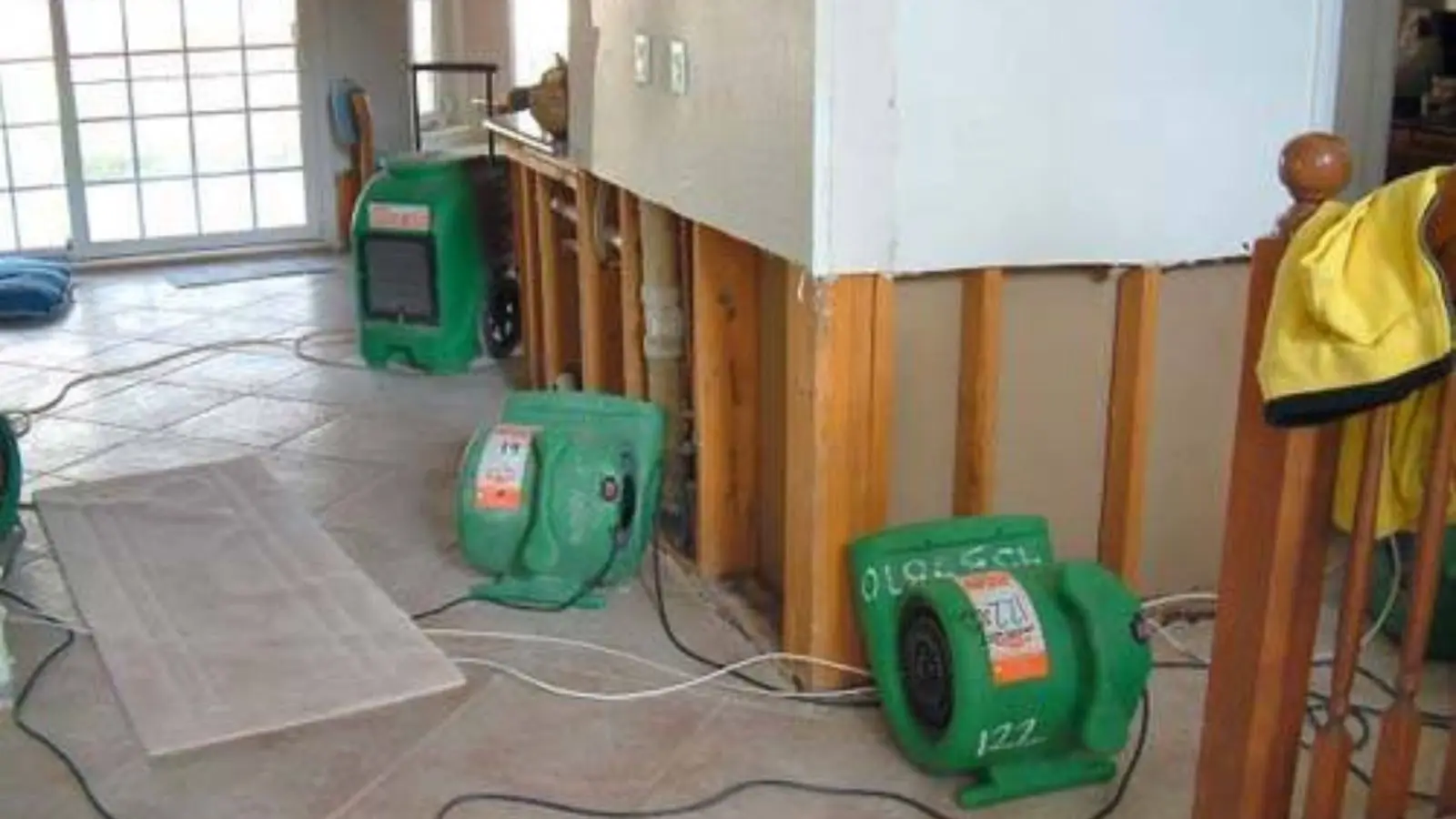
If water is spreading through your home right now, this is the page and the call that matters. Emergency water mitigation in Flower Mound, TX means stopping the damage in the first 24 to 72 hours: shutting off the source, removing standing water, mapping moisture and setting drying equipment. Our dispatch line is open 24/7. While you wait, shut off the main water valve, lift valuables off wet floors and keep people and pets out of the affected rooms.
Mitigation is not repair and it is not cleanup. It is the work that decides whether repair is small or large. Every hour that drywall, insulation and flooring stay wet, the damage moves further into the structure.
Wet Spots, Soft Walls and Damp Smells: Is That Mitigation?
Most people do not search for mitigation. They search for what they see: a wet spot in a closet ceiling, carpet that squishes underfoot, a wall that feels cool and damp, a smell near the water heater. A damp ceiling stain, a floor that feels soft or an odor that returns after you mop all point to water that is still inside the structure.
The trade name for the fix is water mitigation, also called structural drying. It means finding every wet surface, including the ones you cannot see, and removing the water before it causes lasting damage or mold. If any of those signs match your home, call now and describe what you see.
When Water Is an Emergency: The First Hour
Do these in order while you wait
- Stop the source. Shut off the main water valve or the valve at the fixture.
- Check electrical safety. Do not step into standing water near outlets, appliances or a panel. Cut power only if you can reach the panel while standing on dry ground.
- If you smell gas or see sparking, leave and call 911 or the utility first, then call the restoration line.
- Lift valuables, shoes and electronics off wet floors. Pull rugs and loose items off damp carpet.
- Keep people and pets out of any water that may be contaminated.
- Take photos and video of the damage before anything is moved.
The Texas Department of Insurance gives similar advice: shut off the water, remove standing water, dry the area quickly and move wet items to a dry place. TDI also warns that mold can start growing within a day after a leak, which is why the first 24 hours matter.
How Mitigation Works, Step by Step
Assess
A technician finds the water source, classifies the water and checks how far it has traveled.
Extract
Pumps and extraction units remove standing water from floors and carpet.
Map
Moisture meters and a thermal camera locate wet drywall, framing and subfloor.
Dry
Air movers and dehumidifiers run until readings reach the dry standard.
Drying equipment is chosen for the room. Air movers push air across wet surfaces, and low grain refrigerant (LGR) dehumidifiers pull the moisture out of the air so it does not settle on cabinets and walls. Dense materials like hardwood and plaster can take longer than drywall, so drying is checked daily with meters rather than ended on a set date.
The industry reference is ANSI/IICRC S500, the published standard for water damage restoration. Ask any company whether its crews work to it and how it documents daily readings.
Water still moving? Call the 24/7 line now and a dispatcher will start your response.
☎ (817) 623-9267Structural Drying: What Gets Dried and How
Structural drying covers everything the water touched, not only what you can see. Wall cavities, the space under cabinets, the subfloor below the carpet and the insulation in the attic can all hold moisture. Crews drill small weep holes or lift toe-kicks to push air into cavities, or remove wet drywall when drying in place will not work.
The crew records moisture readings at set points on day one and again each visit. Those readings are the proof that drying is finished, and they are the same readings your insurance adjuster may ask to see. Equipment stays until every reading is back in the normal range for that material.
| Water category | Typical source | What mitigation does |
|---|---|---|
| Category 1 | Broken supply line, overflowing sink | Extract, dry, usually save drywall and flooring if caught quickly |
| Category 2 | Washing machine or dishwasher discharge | Extract, treat, dry, replace pad and soft materials |
| Category 3 | Sewage, rising flood water | Containment, removal of affected porous materials, disinfect |
Causes We See Around Flower Mound
Supply line failures, water heater leaks, toilet overflows and roof leaks are common causes of a mitigation call. A hard freeze adds another. The National Weather Service recorded 93 hours at or below freezing at DFW from February 9 to 13, 2021, then 139 more hours from February 13 to 19, and homeowners who lost a pipe in a stretch like that needed mitigation fast.
Flower Mound's southern edge runs along Grapevine Lake and Marshall Creek, so owners on that side should check the FEMA flood map for their address and ask their insurer about separate flood coverage. Most home policies exclude flood. For outside water entering the home, see flood damage restoration.
What Affects the Cost of Water Mitigation
- Water category: clean, gray or sewage water.
- Square footage affected and how far it traveled.
- Materials involved: drywall, hardwood, tile, insulation.
- Drying days and the amount of equipment needed.
- How quickly mitigation began after the loss.
The sooner drying starts, the less material has to be removed, and that usually keeps repair smaller. Dispatch explains the scope and price before work starts. For your real number, call the 24/7 line.
On insurance, TDI says sudden and accidental water damage is often covered and gradual leaks often are not. Check your policy or ask your insurer, and photograph the damage first. Moisture logs from the crew help document the loss.
After the Structure Is Dry
Once readings are normal, the rebuild starts. See water damage repair for drywall, flooring and paint, and water damage cleanup for debris removal and sanitizing. Mitigation also reaches nearby towns, including Lewisville, and covers Flower Mound ZIP codes 75022 and 75028.
Frequently Asked Questions
Water mitigation is the emergency work that stops water damage from spreading. It includes finding the source, extracting standing water, mapping moisture and drying the structure with air movers and dehumidifiers.
Mitigation stops and reverses the water damage in the first 24 to 72 hours. Restoration and repair rebuild afterward. Doing mitigation first usually keeps the rebuild smaller.
Drying often takes several days and depends on the materials, the water category and the equipment used. Crews check meters at each visit and end drying when readings reach the normal range, not on a fixed date.
Yes. The dispatch line is answered 24/7, including nights, weekends and holidays, and same-day response is available when crews are free. Call as soon as you notice water.
A household fan can help on a small, clean spill. For anything larger, shut off the source, lift valuables and call. Professional equipment dries wall cavities and subfloors that a home fan cannot reach.
TDI says most policies cover sudden and accidental water damage. Gradual leaks are generally excluded. Check your policy, photograph the damage and ask your insurer what documentation it needs.