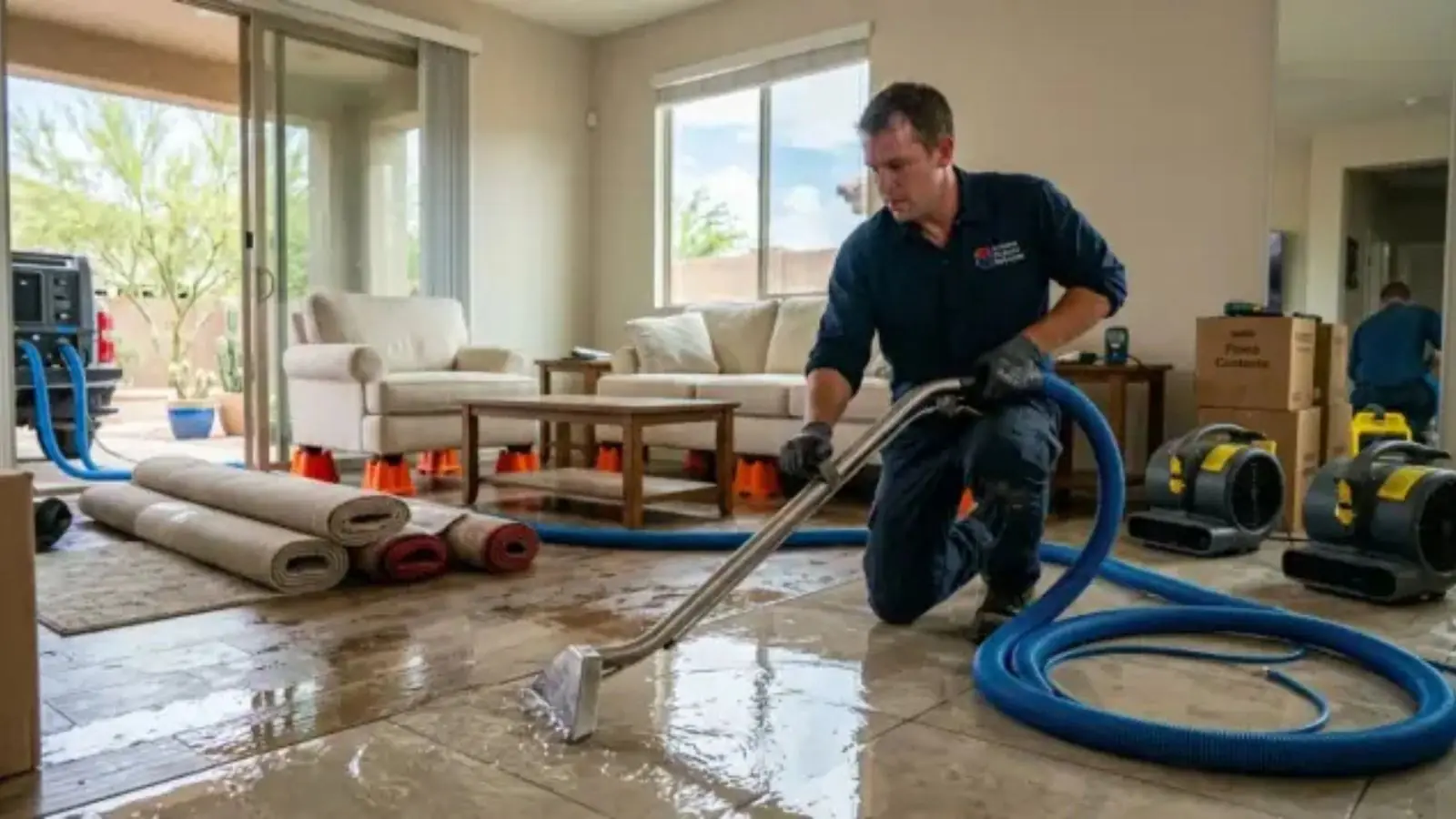
Standing water is a clock that does not pause. Emergency water removal in Flower Mound, TX uses submersible pumps and truck-mounted or portable extraction units to pull water off floors and out of carpet before it soaks into drywall and subfloors. Dispatch answers 24/7. While you wait, shut off the main water valve if a pipe is the source, stay out of water near outlets and appliances, and lift valuables to dry ground.
Water removal is the first physical step of any water loss. It is narrower than water mitigation, which also includes moisture mapping and structural drying. Removal gets the bulk of the water out, and drying finishes the job.
When Standing Water Is an Emergency
Water across a floor is already moving into baseboards and under walls. If it is rising, entering from outside, or reaches electrical outlets, treat it as an emergency. Water that came from a toilet, drain or outside flooding may carry bacteria and should not be walked through.
What to do before the crew arrives
Never step into standing water if outlets, power strips or appliances are submerged. Cut power only if you can reach the panel while standing on dry ground.
If you smell gas or see sparking, leave the home and call 911 or the utility before calling the restoration line.
Keep children and pets out of the water, especially if it came from a drain, toilet or outside.
Burst Pipe Water Damage
A burst pipe under a sink, behind a wall or in the attic is one of the most common reasons for an emergency call. Water can run for an hour or more before anyone notices, and attic lines drop water into ceilings that then sag and fail. The first move is the main shutoff, usually near the water meter or where the line enters the house.
Once the water is off, crews extract what is on the floor, open any bulging ceiling sections to release trapped water and set drying equipment. The line that failed still needs a plumber. Restoration handles the water, and a plumber handles the pipe, so expect to coordinate both.
Freeze events raise the risk. The National Weather Service recorded a low of minus 2 degrees Fahrenheit at DFW on February 16, 2021, after a long stretch at or below freezing. Homeowners who know where their main shutoff is can limit a pipe failure in minutes.
Standing water in your home? Call the 24/7 line now.
☎ (817) 623-9267How Water Extraction Works
| Equipment | What it does | Best for |
|---|---|---|
| Submersible pump | Moves large volumes of standing water | Flooded rooms, crawl spaces, lower levels |
| Truck-mounted extractor | High vacuum pull from carpet and hard floors | Large areas with saturated carpet |
| Portable extractor | Moves through tight rooms and stairs | Smaller spaces and upper floors |
| Moisture meter | Reads moisture in wood and drywall | Confirming what is still wet |
| Thermal camera | Shows cool, wet areas behind surfaces | Finding hidden water |
Extraction removes the water you can see, but it does not dry the structure. A thin film left in carpet pad, subfloor and wall cavities is what causes odor and mold weeks later. That is why removal flows directly into drying, and the ANSI/IICRC S500 standard treats drying to normal readings as part of the job. TDI also notes that mold can start growing within a day after a leak.
Crawl Space and Lower-Level Water
Water in a crawl space or lower level is often not visible from the living area. Callers describe water coming up from irrigation backflow, a failed line or heavy rain. Crews pump the space, check insulation and subfloor underside, and set equipment to dry the framing above.
If the water came in from outside during a storm, the cause may fall outside homeowner coverage. Check your policy, and see flood damage restoration for how outside water is treated differently from a plumbing failure.
What Affects the Cost of Water Removal
- How much water and how deep it stands.
- Water category: clean, gray or sewage.
- Area and materials: carpet, hardwood, tile, drywall.
- Access: stairs, crawl spaces and tight rooms take more time.
- How long the water has been standing before extraction starts.
Scope and price are explained before work starts. For your real number, call the 24/7 line. On insurance, TDI says sudden and accidental water damage is often covered, and gradual leaks and floods usually are not. Check your policy or ask your insurer, and take photos before anything is removed.
Removal Is Followed by Drying and Repair
After extraction, structural drying removes the water you cannot see, then repair rebuilds what could not be saved. See water damage cleanup for removing debris and sanitizing, and water damage repair for the rebuild.
Emergency water removal covers Flower Mound ZIP codes 75022 and 75028 and nearby towns including Grapevine and Argyle. Call the 24/7 line from any of them and a dispatcher will route the nearest available crew.
Frequently Asked Questions
It is the first physical step of a water loss: using pumps and extraction units to remove standing water from floors and carpet before it soaks into the structure.
Yes. Dispatch is answered 24/7, including nights, weekends and holidays, and same-day response is available when crews are free. Call as soon as you see standing water.
Shut off the main water valve, avoid standing water near electrical items, lift valuables and call. If you smell gas or see sparking, leave and call 911 or the utility first.
No. Water soaks into drywall, baseboards and subfloors within hours. Removing it quickly limits how much material must be replaced and reduces the chance of mold, which TDI says can start within a day.
Sewage is treated as contaminated water. Crews work in protective gear, remove affected porous materials and disinfect. Stay out of the area and call so the right crew is sent.
TDI says most policies cover sudden and accidental water damage, while gradual leaks and floods are generally excluded. Check your policy, photograph the damage and ask your insurer what documentation it needs.