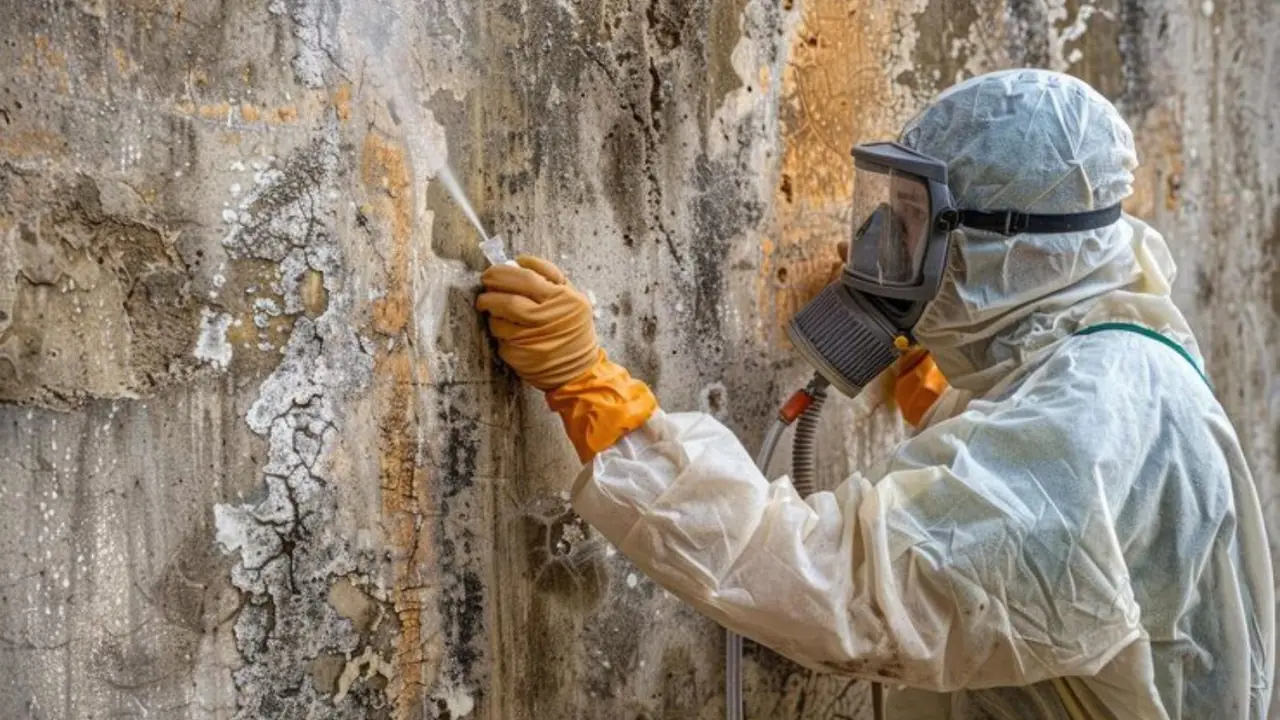
Attic mold removal cost depends on five things: how much roof decking and framing is affected, how much insulation has to be removed, whether the cause is a roof leak or condensation, how much containment the attic needs, and what has to be repaired afterward. No fair price exists before someone climbs up and measures. A written scope that lists each of these is worth more than any phone estimate.
An attic is a harder place to work than most rooms. Access is tight, the space is hot or cold depending on the season, and everything disturbed can drift down into the house below. That is why attic jobs are scoped carefully, and why the cause matters before the cleaning does.
Roof leak or condensation: find out which
The two causes leave different marks. A roof leak creates damp patches that line up with a roof penetration, flashing or a damaged shingle area, and the staining tends to grow after rain. Condensation shows up as scattered spotting on the underside of the roof deck, often near the north side or around vents.
| Sign | Roof leak | Condensation |
|---|---|---|
| Pattern on the decking | Localized, tied to a penetration or flashing | Spread across a wide area |
| Timing | Gets worse after rain | Worse in cold or humid periods |
| Insulation | Wet or stained below the leak point | Damp or matted across large sections |
| Nearby clues | Stain on a ceiling below, rust on nails near a leak | Frost or droplets on nails, blocked vents |
| Typical repair | Roof repair, then drying and cleaning | Ventilation and air-sealing fixes, then cleaning |
Fixing the cause comes first, and it is usually a different trade from the one that cleans the mold. A roofer repairs a leak, and a ventilation or insulation contractor corrects condensation. If you clean without fixing the cause, the mold can return.
Factor 1: roof decking and framing area
The affected surface area drives labor and containment. Growth on a few sheets of decking near one leak is a limited job. Growth across much of the roof deck, rafters and truss members is a larger one, and the plan changes with it.
Wood can often be cleaned if it is structurally sound, but badly damaged decking may need replacement. A roofer or a framing carpenter decides that after the surface is cleaned. Ask the bidder who makes that call and how it is documented.
Factor 2: insulation removal
Insulation is usually the single biggest line item. Loose-fill or batt insulation that is wet or contaminated is typically removed and disposed of, then replaced after the area is cleaned. The deeper and larger the insulated area, the more time and disposal the job needs.
Sections that stayed dry may be left in place if they are not contaminated. A good scope marks which sections are removed and which stay, with measurements. If the quote says only remove insulation, ask for areas in square feet.
Factor 3: ventilation and the source repair
Poor attic ventilation is a common reason moisture builds up. Blocked soffit vents, bath fans that exhaust into the attic and missing ridge or gable vents all change the air and moisture in the space. Correcting them is part of the real cost of solving the problem, even when it is not part of the cleaning.
Water coming through the roof right now? Call the 24/7 line and a dispatcher will talk you through the first steps.
☎ (817) 623-9267Factor 4: containment and protection of the house below
Attic work disturbs material above your living space. Containment usually includes sealing the attic hatch, protecting the pathway through the home and running air filtration during the work. A hatch in a hallway closet needs different protection than a pull-down stair in the middle of a living room.
The more thorough the containment, the more it adds to the price, and the better it protects the rest of the home. Ask what is used and where it is placed. If the answer is vague, the protection probably is too.
What a proper attic clean-up scope includes
- A moisture and condition assessment of decking, framing and insulation
- The cause identified and a plan for who fixes it
- Containment of the attic and the path through the home
- Removal of contaminated insulation and materials, bagged and removed
- HEPA vacuuming and cleaning of the wood surfaces
- Drying, then a post-work inspection against the written criteria
In Texas, mold assessment and mold remediation are licensed activities. TDLR says generally one company may not do both on the same project, so a licensed assessor writes the protocol and a licensed remediator follows it. Visible mold under 25 contiguous square feet can generally be cleaned by an owner, but attic growth is rarely that small and is hard to reach safely.
Insurance and attic mold
The Texas Department of Insurance says sudden and accidental water damage is generally covered, and mold on a covered damaged item is also covered. Gradual leaks and seepage are generally excluded, including the mold they cause. Most home policies do not include mold cleanup and testing after the damaged item is removed, so ask your agent before work starts.
If a storm damaged the roof, photograph the damage before repairs and keep damaged materials until the adjuster sees them. Make temporary repairs to prevent further damage and keep receipts. Hold off on permanent repairs until your insurer has seen the damage.
A Flower Mound note: what the weather normals mean for your attic
The National Weather Service gives Dallas/Fort Worth a 1991-2020 annual precipitation normal of 37.01 inches, so a roof in this area sees real rain over the year. That makes flashing, valleys and vent penetrations the places to inspect first when you find staining in the attic. Ask your roofer to check those spots before anyone prices mold work.
The same normals show 29 freezes per season on average. Freezing weather can drive moisture inside an attic as warm indoor air meets a cold roof deck. If your attic spotting is scattered and shows up in colder months, ask a ventilation or insulation contractor to assess it before you budget for repeat cleaning.
Where to go from here
If the attic problem started with a leak into your living space, water damage repair covers the ceiling and drywall rebuild that follows drying. Our dispatch team serves Flower Mound along with Argyle and Grapevine, and the mold remediation page explains how licensed jobs are structured.
Frequently Asked Questions
Larger decking and framing area, more insulation to remove, extra containment and a source repair add cost. The cause also matters, because a roof leak and condensation need different fixes.
A roof leak creates damp patches tied to a penetration or flashing and tends to worsen after rain. Condensation shows up as spread-out spotting, often in colder or humid periods.
Wet or contaminated insulation is typically removed and replaced. Dry, uncontaminated sections may stay, and a good scope marks which is which.
TDLR says visible mold under 25 contiguous square feet can generally be cleaned by an owner. Attic growth is often larger and hard to reach safely, so consider a licensed professional.
Mold on a covered damaged item is covered, but gradual leaks and the mold they cause are generally excluded. Check your policy and ask your insurer.
Start with the cause, which may need a roofer or ventilation contractor. For the mold itself, call the 24/7 line and hire a company that holds a current TDLR license.