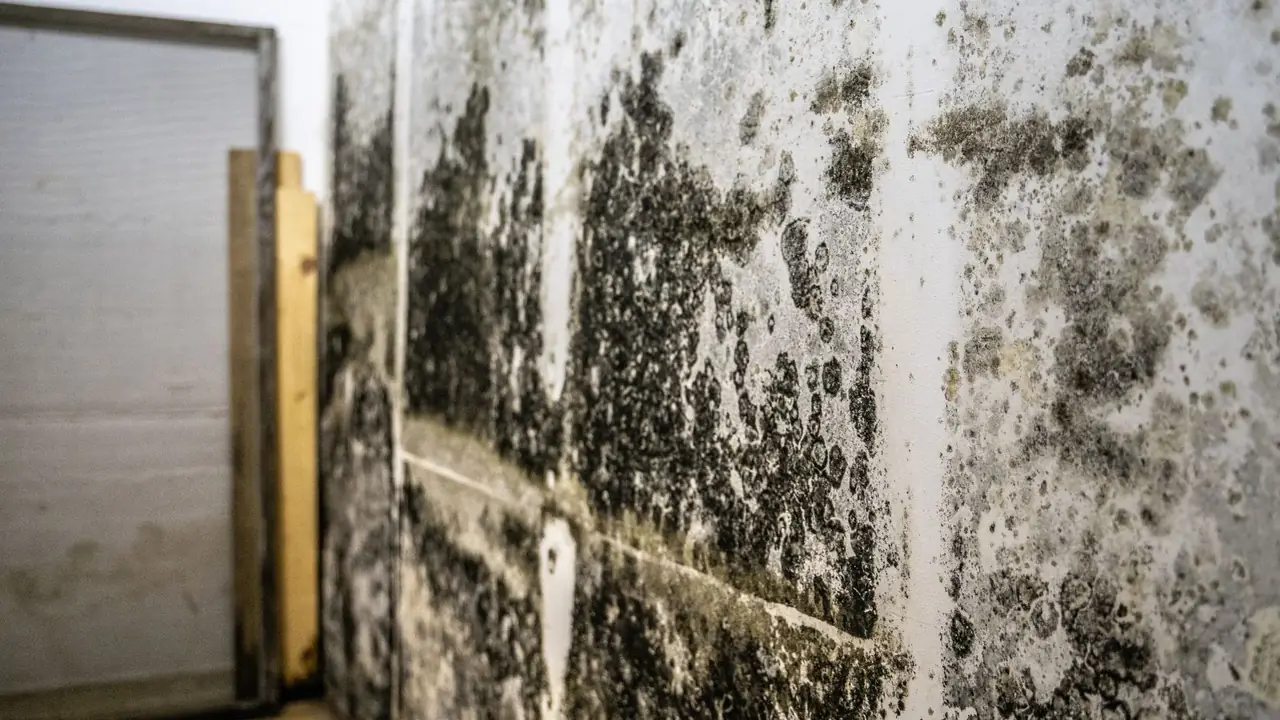
The cost to remediate mold in a basement depends on six things: how much surface is affected, what materials it is on, whether the moisture source is fixed, how much containment the job needs, the assessor's written protocol, and the clearance testing that follows. No dependable number exists without seeing the space. Anyone quoting a single price over the phone is guessing.
This guide walks through each factor so you can read a quote line by line. It applies to a basement, a walkout level, a crawl space, a garage or any lower-level room, since the work and the cost logic are the same. If your home has none of these, the same factors apply to a ground-floor room that took on water.
Factor 1: how much area is affected
Square footage is the starting point, but the number that counts is the surface that is actually affected, not the room size. Mold on one wall of a finished room is a different scope from growth across a ceiling, two walls and the framing behind them. The assessor measures and records this, and the remediation plan follows it.
Texas draws a practical line at 25 contiguous square feet of visible mold. TDLR says growth under that size can generally be cleaned by an owner or maintenance staff. Above it, a licensed contractor is the safer route, and the cost starts to reflect containment and protocol work.
Factor 2: what the mold is growing on
Materials decide how much has to be removed instead of cleaned. Hard surfaces such as concrete and sealed wood can often be cleaned. Porous materials such as drywall, insulation, carpet and padding usually cannot be saved once they are contaminated and are removed and replaced.
| Material | Typical approach | Cost effect |
|---|---|---|
| Concrete or block walls | Cleaning and drying | Lower, if the surface is sound |
| Painted drywall | Removal if wet or growth is behind paint | Higher, because rebuild follows |
| Insulation in wall cavities | Removal of affected sections | Higher, because cavities must open |
| Carpet and pad | Removal and disposal | Moderate, depends on area |
| Wood framing | Cleaning and drying, replacement if damaged | Varies with damage |
| Stored belongings | Cleaning or disposal, case by case | Varies with volume |
Factor 3: the moisture source
Mold comes back to wet places. If the source is a leaking supply line, a failed window well, a sump issue or groundwater seepage, that has to be repaired or addressed before remediation makes sense. A remediation bill for a space that keeps getting wet is money spent twice.
Restoration is not waterproofing, and that difference affects your budget. A restoration crew dries and cleans what water damaged. A waterproofing or drainage contractor fixes how water gets in, so you may need both trades. When a leak or flooding event came first, flood damage restoration handles the water side, and the mold work follows once the structure is dry.
Factor 4: containment and equipment
Containment keeps disturbed material from spreading into clean areas. It usually means plastic sheeting, sealed doorways and negative air machines with filtration. A small, accessible area needs less than a whole level with ductwork running through it.
Equipment time adds to the line items as well. Air movers and dehumidifiers dry the space, and air scrubbers filter the air during the work. Each additional day of equipment is part of the price, which is why a fast, well-planned job often costs less than a slow one.
Factor 5 and 6: the protocol and the clearance
A licensed mold assessment consultant writes a protocol before remediation starts. It states the materials, locations, methods and cleanup criteria the remediation contractor must follow. After the work, a post-remediation inspection checks that the area meets the criteria.
These steps are separate line items, and they protect you. The assessor's report tells the remediator exactly what to do and gives you a record. If a lender, buyer or insurer needs proof, that paperwork is what they will ask for.
Want your real number? Call the 24/7 line and a dispatcher will explain how scope and price are set before work starts.
☎ (817) 623-9267How to read a basement mold quote
- Does it list the affected area in square feet, room by room?
- Does it say which materials come out and which are cleaned?
- Does it say how the moisture source is being handled or by whom?
- Does it describe containment and the equipment that will run?
- Does it name the protocol the work follows, and who wrote it?
- Does it include a post-remediation inspection or clearance step?
If a quote leaves any of those out, ask why. A good quote is specific enough that two companies can be compared item by item. A vague lump sum hides what is and is not included.
Insurance and cost
The Texas Department of Insurance says mold that develops on a covered damaged item is also covered, while gradual leaks and seepage are generally excluded along with the mold they cause. Most home policies do not include mold cleanup and testing after the damaged item is removed, though some insurers let you add that coverage. Check your policy and ask your insurer before you sign a contract.
A Flower Mound note: expect two scopes, from two companies
TDLR says companies that do mold assessment or mold remediation must be licensed, and that generally one company may not do both on the same project. In practice a basement job in Flower Mound has an assessor's protocol and a remediator's work plan, so you will see two documents and often two invoices. Budget for both before you compare quotes.
When remediation is finished, a licensed remediator issues the Certificate of Mold Damage Remediation after a post-remediation inspection, on Texas Department of Insurance Form MDR-1. It certifies that the property does not contain evidence of mold damage. If you plan to sell or refinance, ask for it in writing before the contract is signed.
Planning ahead and where we dispatch
Ask each bidder to confirm its TDLR license in writing and to state what it will not do. If water caused the problem, a crew can begin drying the same day while you arrange the assessment. We dispatch to Lewisville and Argyle as well as Flower Mound, and our mold remediation page explains how the work is structured.
Frequently Asked Questions
The size of the affected area and the materials involved are the largest drivers. Porous materials such as drywall and insulation are usually removed, which adds rebuild work.
TDLR says generally one company may not do both mold assessment and mold remediation on the same project. The assessor writes the protocol and the remediator follows it.
A post-remediation inspection checks that the work met the protocol. A licensed remediator issues the Certificate of Mold Damage Remediation after that inspection.
Mold on a covered damaged item is covered, but gradual leaks and the mold they cause are generally excluded. Most policies also exclude mold cleanup and testing after the damaged item is removed, so check your policy.
Sometimes, but often it is a separate trade. Ask the bidder to state in writing who is fixing the source and when.
Call the 24/7 line and a dispatcher will explain how scope and price are set before work starts. Expect an on-site look before any number is given.