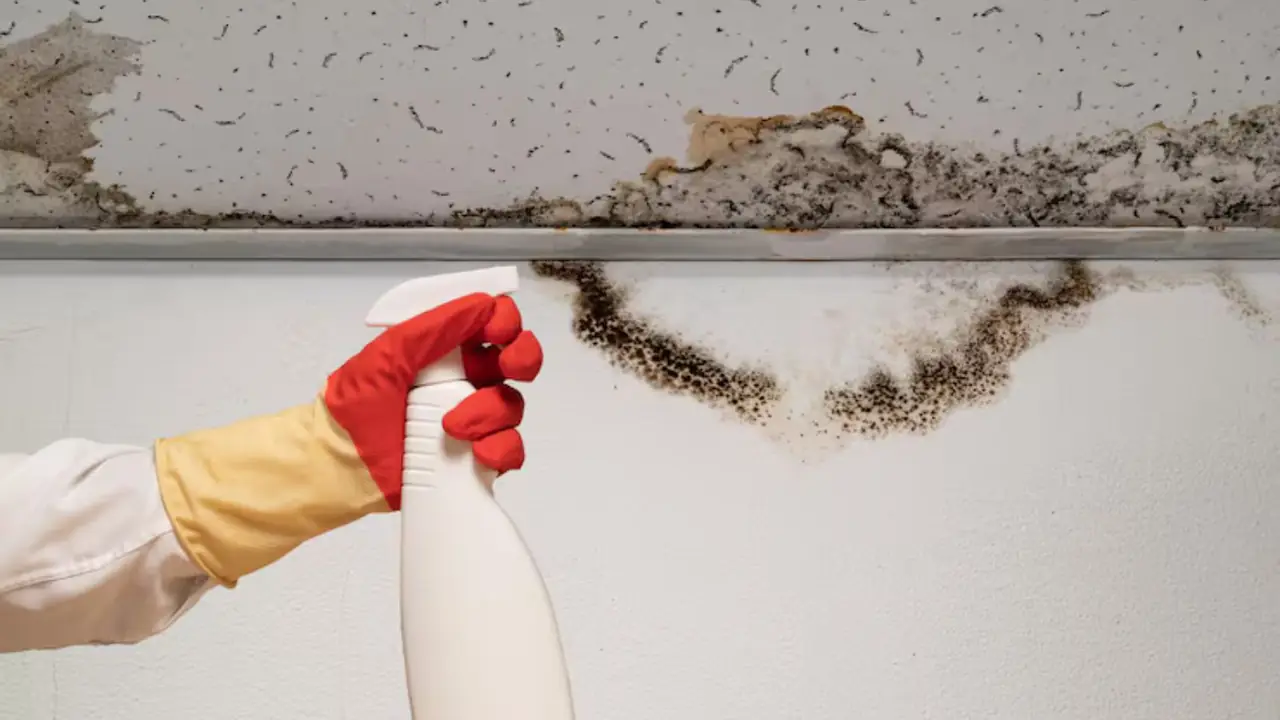
The earliest signs of mold on a ceiling are usually small: a pale tan stain that slowly darkens, tiny gray or black dots in a cluster, paint that bubbles or peels, and a musty smell in the room. Dark color alone does not tell you what the growth is, because stains from water, dust and soot can look the same. What matters is the moisture behind it.
Mold needs moisture to grow, so a spotted ceiling is a water problem before it is a mold problem. The Texas Department of Insurance warns that mold can start growing within a day after a leak. Finding and stopping the water source is step one, and cleaning comes after.
What early ceiling mold looks like
Early growth tends to start at an edge or a seam, where moisture collects. Look at the corner where wall meets ceiling, around bathroom fans, around recessed lights and along the line of a drywall joint. Spots often appear in a ring or a cluster instead of one even stain.
- Gray, green, brown or black speckling that spreads slowly over weeks
- A tan or yellow stain with a darker edge, often shaped like a water ring
- Paint that bubbles, flakes or feels soft when pressed
- A musty or earthy smell that is stronger in that room
- A ceiling that looks slightly sagging or feels damp to the touch
Press the area gently with a gloved finger. Damp, soft drywall means water is still reaching it or has not dried. Firm, dry drywall with a surface stain suggests an older event that has since stopped.
Find the moisture source first
A ceiling is a floor for whatever sits above it. The usual suspects are a roof leak above the attic, a plumbing line or tub in an upstairs bathroom, an air conditioner condensate line that backed up, and warm indoor air hitting a cold surface in an attic. Each one leaves a slightly different pattern.
| Likely source | What you often see | Where to look |
|---|---|---|
| Roof leak | Stain that grows after rain, often near an exterior wall | Attic decking, roof penetrations, flashing |
| Upstairs bathroom | Stain under a tub, shower or toilet, sometimes with dripping | Supply lines, drain connections, shower pan |
| AC condensate line | Stain near the air handler, often a damp closet or hall ceiling | Drain pan and line near the air handler |
| Attic condensation | Scattered spotting across a large ceiling area | Insulation, vents and exhaust fan ducts |
| Bathroom fan duct | Spotting around the fan and the ceiling near it | Duct connection and where it exits the roof |
If the stain keeps growing after the source is stopped, the cause is still active. A repeat stain on the same spot after repairs is a sign the real source was missed. A moisture meter and thermal imaging can find wet drywall and insulation that you cannot see, which is part of how water mitigation crews decide what stays and what goes.
What not to do
Do not scrub or spray a ceiling stain hard and hope it goes away. Aggressive scrubbing can spread spores into the room and leave the damp drywall behind it untouched. Painting over it traps moisture and hides the problem until the stain returns.
Do not poke or cut into a sagging ceiling while it may be holding water. Trapped water can release all at once, and wet insulation is heavy. If the ceiling is bulging, keep people out of the room and place a bucket or tarp under it, then call the 24/7 line.
Safe first steps for a stained ceiling
- Stop the water if you can find the source, such as a fixture shut-off valve
- Keep power off to any fixture in a wet ceiling, and stay out of rooms with water near outlets
- Move furniture and valuables out from under the stain
- Photograph the stain with a coin or ruler beside it for scale
- Run a dehumidifier or fan to dry the room, keeping fans away from the stained area
- Call a restoration line to measure moisture before anything is torn out
Spotting on a ceiling and not sure why? Call the 24/7 line and a dispatcher will explain the inspection and what it covers.
☎ (817) 623-9267When a licensed assessor belongs in the picture
Texas licenses mold work through the Texas Department of Licensing and Regulation, known as TDLR. Companies that do mold assessment or mold remediation must be licensed by TDLR. When you hire for either one, ask for the license number and check it on the TDLR site.
Generally, one company may not do both mold assessment and mold remediation on the same project. The assessor writes a protocol that the remediator follows, so expect two separate scopes on a larger job. If you are only unsure whether it is mold, a licensed assessor is the right call, and if a leak caused it, a restoration crew can start drying while you arrange that.
How much is too much to handle yourself
TDLR says visible mold under 25 contiguous square feet can generally be cleaned by an unlicensed owner or maintenance staff. That is about a five-foot by five-foot patch. A small spot above a shower, with the source fixed and the drywall dry, is the kind of job that threshold describes.
Past that size, or if the drywall is wet, soft or sagging, bring in help. A licensed mold remediation contractor must follow the state rules even on jobs under 25 square feet, so a hired job is always held to the rules. If an insurance claim is involved, the state advises using a licensed mold professional and expects an inspection showing the mold was removed and the cause fixed.
A Flower Mound note: what the 25 square foot line means for you
The state's 25 contiguous square feet line applies to mold you can see, so measure the visible area before you decide on a plan. A patch smaller than that, on a ceiling where the leak is already fixed, is within what an owner can handle under TDLR guidance. If you are on a sale or lease deadline, documentation matters more than speed.
Homeowners in Flower Mound with a stain near the second-floor bathroom or the air handler closet should treat the source as the real project. Ask the Town of Flower Mound building department whether the repair needs a permit before you open any walls, because permit rules vary and the town can confirm what applies to your address.
Getting the repair sequence right
A sound repair goes in order: stop the source, dry the structure, remove what cannot be dried, clean to a clear standard, then rebuild. Skipping the drying step is the most common reason a ceiling stain comes back. The ANSI/IICRC S500 standard covers water damage restoration and S520 covers mold remediation, so you can ask any company whether its crews work to them.
If the leak that caused the problem is part of a bigger loss, our dispatch team also covers nearby towns, including Lewisville and Argyle. When the area has dried and been cleared, mold remediation and the rebuild can be planned as separate steps.
Frequently Asked Questions
No. Water stains, soot and dust can look similar to mold. A stain that is damp, spreading or accompanied by a musty smell is more likely to involve mold growth, and a licensed assessor can confirm it.
The Texas Department of Insurance warns that mold can start growing within a day after a leak. That is why shutting off the water and drying the area quickly matters.
TDLR says visible mold under 25 contiguous square feet can generally be cleaned by an owner or maintenance staff. Fix the moisture source first and make sure the drywall is dry and firm.
Collecting air or spore samples requires a TDLR mold assessment technician or consultant license. Visual observation alone does not. If you hire someone to test, ask to see their license.
Not until the area is dry and the source is fixed. Paint over damp drywall hides the problem and the stain can return.
Start by stopping the water source, then call the 24/7 line so a crew can measure moisture. For mold assessment or removal, hire a company that holds a current TDLR license.