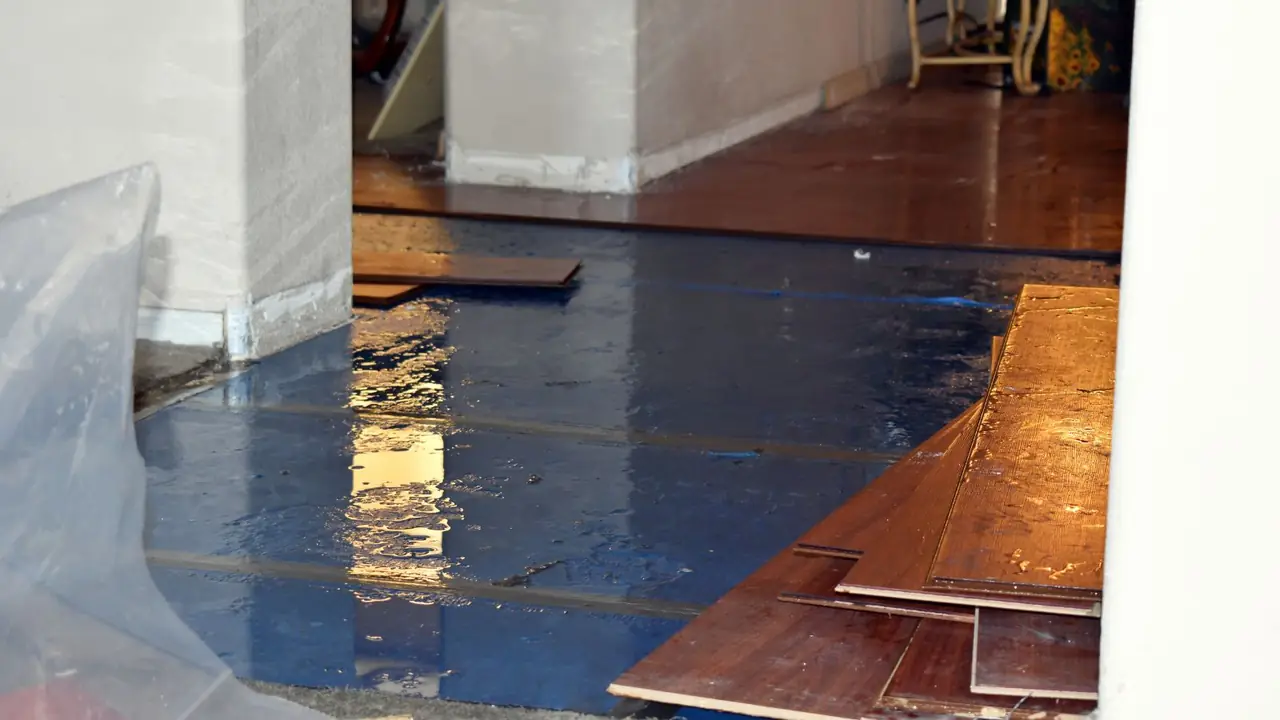
Hardwood that gets wet changes shape because the boards absorb water unevenly. Cupping means the edges rise higher than the center, crowning means the center rises, and buckling means boards lift off the subfloor. Catch it early and many floors can be dried in place and refinished. Wait too long, or let the subfloor stay wet, and the boards usually come up.
If water is still on the floor, stop the source first and call the 24/7 line. If the damage is old and you only noticed a ripple near a wall, jump to the table below to see what it means.
Cupping, Crowning and Buckling: What Each One Means
| Symptom | What it usually means | Typical action |
|---|---|---|
| Cupping: edges higher than the center | Moisture came from below or the board sat wet on its underside | Dry the floor with controlled air, wait for readings, then sand if it flattens |
| Crowning: center higher than the edges | Often the floor was sanded while still cupped, or the top surface got wet | Let it dry fully, then re-sand to level if the boards allow |
| Buckling: boards lifting off the subfloor | Heavy or long exposure, often from a large leak or flood | Boards are usually removed and the subfloor is dried and checked |
| Gaps between boards after drying | Boards shrank back as they dried | Usually cosmetic, filler or refinishing, readings decide |
| Dark stains or black edges | Water sat long enough to stain the wood or support mold | Section replacement, plus a look at the subfloor |
These patterns are a guide, not a diagnosis. A moisture meter on the board face, the board underside and the subfloor shows what the surface hides.
Dry It or Replace It?
The deciding factor is how long the boards stayed wet and how much of the floor is affected. Solid hardwood nailed to a wood subfloor can handle a short exposure better than engineered planks glued down over concrete. Engineered products with thin top layers can delaminate and rarely recover once they swell.
Specialty drying systems use mats or panels under a vented cover to pull moisture from the boards through the surface. They are used when the floor is worth saving and the damage has not gone past cupping. A crew sets a drying goal, measures every visit and stops only when the boards and subfloor meet it.
Replacement is the better call when boards are buckled, black at the edges, or soft. Pulling a few rows early also gives air access to the subfloor. Water mitigation covers the early drying stage, and rebuilding the floor itself falls under water damage repair.
Water is still spreading or you need an inspection? Call the 24/7 line and talk to a dispatcher now.
☎ (817) 623-9267What to Do in the First Hours
Hardwood first steps
- Stop the source: close the valve, shut off the washer supply or turn off the AC and clear the condensate line.
- Remove standing water with towels, a mop or a wet vacuum. Skip heat guns and hair dryers, because fast surface drying can crack the finish.
- Lift rugs, furniture legs and anything that traps moisture against the wood.
- Photograph the floor before moving things and keep damaged material until your adjuster sees it.
- Call the 24/7 line before you decide anything permanent.
Two Common Causes in Homes Like Yours
A washing machine supply hose or valve that breaks sends a lot of water across a laundry room and into the hall in minutes. Hardwood in the next room can be wet within the hour. A fast response with extraction and drying often saves the floor if the wet area is small.
An HVAC condensate line that backs up drips more slowly. The water can run under flooring for days before anyone sees a stain. If the water is spreading across the floor, emergency water removal comes first, and the same extraction steps apply.
Refinishing Comes Last
Sanding and refinishing before the boards are dry traps moisture and often ruins the finish within months. The right order is dry, verify with readings, make repairs, then sand and finish. A floor that has returned to its pre-loss moisture content can usually be sanded flat if the boards were not permanently deformed.
Color match is the last surprise. New boards and old boards age differently, so blending across a full room or a natural break like a doorway looks better than patching a single row.
Flower Mound note: check your policy before you tear anything out
The Texas Department of Insurance says most homeowner and renter policies cover sudden and accidental water damage, such as a broken washer hose, while gradual leaks are generally excluded. It also advises photographing the damage before repairs and holding off on permanent repairs until your insurer has seen it.
Your policy language is what matters, not the neighborhood. Ask your insurer before you commit to replacing a whole floor, and keep the damaged boards until the adjuster has seen them. If your house is across the line in Grapevine, the same advice applies.
Cost Factors for Hardwood Water Damage
Cost depends on the product and how it was installed (solid, engineered, nailed, glued or floating), how many square feet are affected, how many drying days the readings require, whether the subfloor needs repair and how much sanding and finishing follows. A dispatcher can explain how scope and price are set before work starts. A wide-open kitchen and dining room usually needs a bigger plan than a hallway.
If the loss reaches neighboring rooms, reach out through Lewisville or the main line, since the same crews serve nearby towns.
Frequently Asked Questions
Often yes if the cause is stopped, the floor dries slowly with measured readings and the boards were not permanently deformed. Sanding too early traps moisture, so wait until readings are stable.
It depends on the species, the finish, the amount of water and whether the subfloor is wet. Drying is measured every visit and ends when readings match a dry reference, not on a calendar date.
Usually the affected boards are removed because buckling means they lifted off the subfloor. A crew checks the subfloor and surrounding rows before deciding how much comes up.
Texas Department of Insurance guidance says sudden and accidental water damage is generally covered and gradual seepage is generally excluded. Ask your insurer how your policy treats the cause of your loss.
The 24/7 line is open at night and on weekends, with same-day response when available. Stop the source and call right away so drying starts early.
Wait for readings to confirm the floor is dry, then talk to a flooring professional. Refinishing a floor that still holds moisture can fail within months.