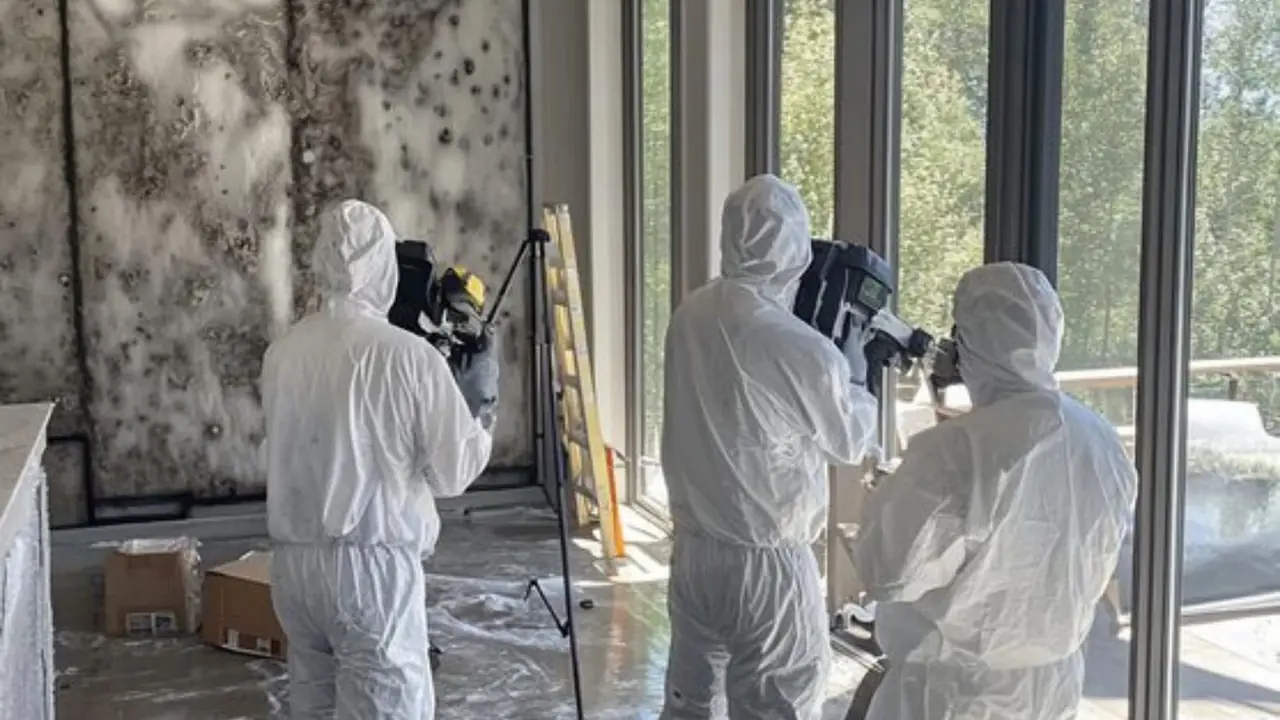
To detect mold in a home, look for visible growth, a persistent musty smell and any area that stays damp, then confirm with a moisture reading. Most mold problems announce themselves this way, and none of it requires a license. Collecting air or spore samples is different, and in Texas that step needs a licensed mold assessor.
The method below works room by room. Start with the places water has been, because mold follows moisture. If you have had a leak, a spill or a long humid stretch, begin there.
Start with a visual check
Use a bright flashlight and look at an angle across walls and ceilings, since staining shows up better in raking light. Mold often looks like fuzzy or speckled patches in gray, green, brown or black. It can also look like a smudge or a dark line along a grout joint.
- Corners of ceilings and the tops of exterior walls
- The wall behind a toilet, tub or shower, and caulk lines around them
- Under sinks, around the dishwasher and behind the refrigerator
- Window frames, sills and the drywall just beneath them
- The closet in a room that backs onto a plumbing wall
- Garage walls and the base of walls in lower-level rooms
Move slowly, and open cabinets and closets. Mold hides where air does not move, so a clean-looking room can still have growth behind the furniture. If you pulled furniture away from a wall and found a patch, that is a common discovery.
Use your nose and your hands
A musty, earthy smell that gets stronger in one room is a useful signal. Smell by itself does not identify mold, but it points to damp materials, and damp materials are where mold grows. Follow the smell to the source.
Touch matters too. Press drywall, baseboards and cabinet bases with a gloved finger. Soft, swollen or cool-and-damp material tells you moisture is present, even when you cannot see any growth.
Measure instead of guessing
A pin or pinless moisture meter reads how wet drywall, wood and subfloor are, and it costs far less than guessing wrong. A hygrometer reads indoor relative humidity. TDLR's consumer tips advise keeping indoor humidity at or below 50 percent, using air conditioning or a dehumidifier when needed.
| Reading or sign | What it suggests | Next step |
|---|---|---|
| Indoor humidity above 50 percent for days | Conditions that favor mold growth | Run air conditioning or a dehumidifier, find the moisture source |
| Drywall reads wet on a moisture meter | Active or recent water intrusion | Stop the source and start drying quickly |
| Musty smell with no visible growth | Hidden damp material, often in a wall or ceiling | Check behind furniture and call for a moisture inspection |
| Visible spotting on grout or caulk | Surface moisture from regular use | Dry surfaces after bathing, clean and improve airflow |
| Stain that returns after cleaning | An unresolved moisture source | Look for a leak above, behind or below the stain |
Where mold hides after a leak
After a leak, water travels. It follows pipes, runs down inside wall cavities and soaks into insulation, so the damp spot you can see is often smaller than the wet area you cannot. Carpet padding, the back of baseboards and the bottom plate of a wall are common hiding places.
The Texas Department of Insurance warns that mold can start growing within a day after a leak. If a leak happened and the area was never properly dried, check it even if it looks fine on the surface. Water mitigation crews use moisture meters and thermal imaging to find wet material behind finished surfaces.
Found a damp spot or a musty room? Call the 24/7 line and ask a dispatcher what an inspection covers.
☎ (817) 623-9267When testing is needed, and who can do it
Most of the time you do not need a lab test to act. If you can see mold or you have a moisture problem, the cause needs fixing either way. Testing helps when you have a smell without a visible source, when a lender or buyer asks for documentation, or when you need a record of what is present.
TDLR says assessment work such as collecting air or spore samples requires a mold assessment technician or consultant license, and that visual observation alone does not. Ask to see the license and confirm it with TDLR. Be wary of a company that offers both testing and removal on the same job, because generally one company may not do both on the same project.
What a mold protocol is
A protocol is a written plan from a licensed mold assessment consultant. It lists the materials, the locations, the methods and the cleanup criteria that the remediation contractor must follow.
- It starts from what the assessor found in the space
- It sets what is cleaned, what is removed and what is left
- It defines how the work is checked when it is finished
What to do if you find mold
Fix the water first, dry the area and keep the space contained, which means closing doors and not sweeping or fanning growth into other rooms. TDLR says visible mold under 25 contiguous square feet can generally be cleaned by an owner or maintenance staff, and homeowners may in some circumstances do their own remediation. If the area is larger, wet, or tied to an insurance claim, bring in a licensed professional.
A Flower Mound note: homes near the lake and creek edges
Grapevine Lake and Marshall Creek form much of Flower Mound's southern boundary, and Twin Coves Park and the North Shore trail run along the lake. If your home sits near that edge, ask whether any lower-level room, garage or crawl space has ever stayed damp after heavy rain. A moisture meter reading in those rooms is a quick way to rule problems in or out.
To see whether your address is in a mapped flood area, check the FEMA flood map for your address. If a past leak or wet spot comes up, ask the Town of Flower Mound building department whether repairs need a permit, since permit rules vary by project.
Nearby help
If you find a damp area, we dispatch crews to Flower Mound and nearby towns, including Grapevine and Lewisville. Our emergency water removal page covers standing water and active leaks, and the mold remediation page explains what a licensed job looks like.
Frequently Asked Questions
Look for fuzzy or speckled patches, a musty smell and dampness nearby. Dark color alone does not identify mold, and a licensed assessor can confirm it.
TDLR's consumer tips advise keeping indoor humidity at or below 50 percent, using air conditioning or a dehumidifier when needed.
Visual observation alone does not require a license. Collecting air or spore samples requires a TDLR mold assessment technician or consultant license.
Generally no. TDLR says one company may not do both mold assessment and mold remediation on the same project.
Often inside wall cavities, behind baseboards, under carpet padding and in insulation. Water travels, so check beyond the visible stain.
Fix the water source, dry the area and call the 24/7 line for an inspection. For testing or removal, hire a company that holds a current TDLR license.