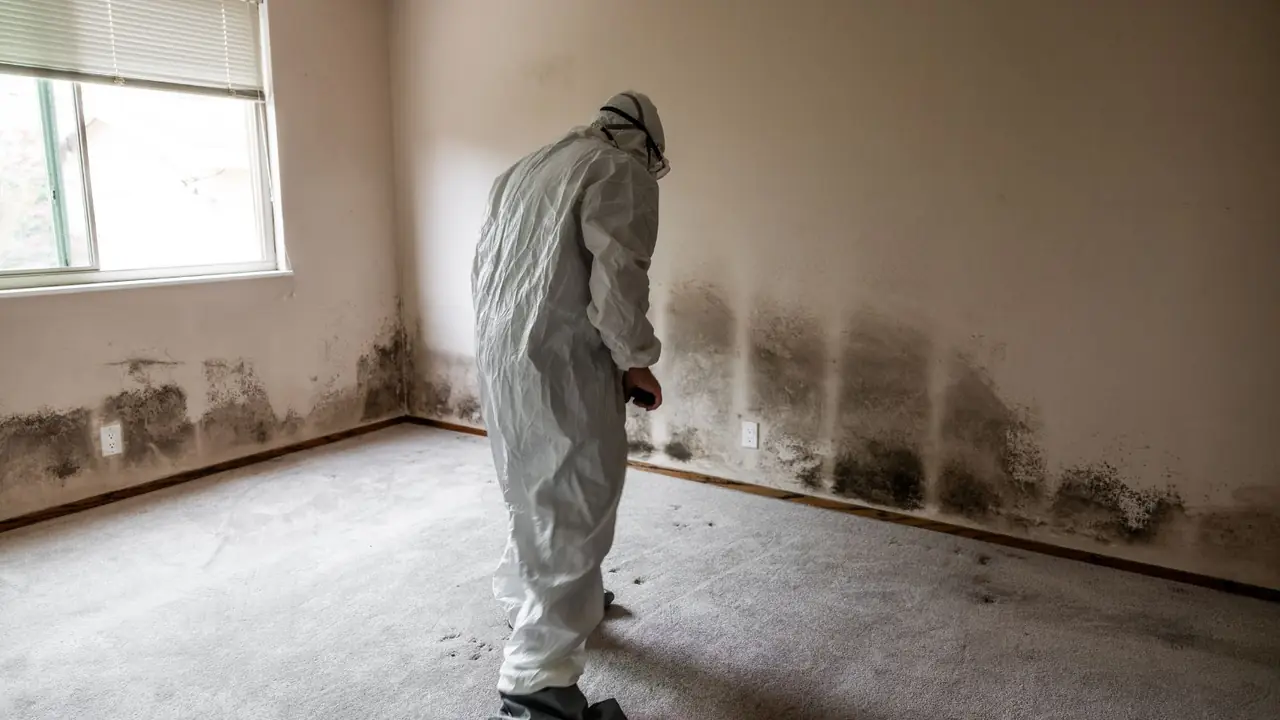
If a buyer, lender or inspector flags mold, you will need two separate jobs done by separate companies. A licensed mold assessor writes a protocol, a licensed remediator follows it, and a post-remediation inspection documents the result. A licensed remediator can then issue a Certificate of Mold Damage Remediation, which is what you hand the buyer.
This guide explains each step and what to expect. It does not promise how a buyer or lender will respond, because that decision belongs to them.
What "Clearance" Actually Means
Clearance means a documented result showing the cleanup met the standards set in the plan. It is not a promise about the future, and it is not a health statement. In Texas, the process is built around a written protocol from a licensed assessor, work by a licensed remediator and an inspection afterward.
The Texas Department of Licensing and Regulation, TDLR, licenses mold assessors and remediators. Companies that do this work must hold a license. Ask any company you consider whether it is currently licensed, and check the TDLR license lookup before you sign.
Who Does What
| Step | Who does it | What you receive |
|---|---|---|
| Assessment and protocol | A TDLR licensed mold assessment consultant | A written protocol listing materials, locations, methods and cleanup criteria |
| Remediation | A TDLR licensed mold remediation contractor | Work done to the protocol, with the moisture source fixed |
| Post-remediation inspection | A licensed professional, as required for the certificate | A record of whether the criteria were met |
| Certificate | The licensed remediator | Certificate of Mold Damage Remediation on TDI Form MDR-1 |
Generally one company may not do both assessment and remediation on the same project. That separation exists so the party checking the work is not the party doing it. If a company offers to do both, ask how it handles the rule.
Water is still spreading or you need an inspection? Call the 24/7 line and talk to a dispatcher now.
☎ (817) 623-9267Why the Moisture Source Comes First
Mold needs moisture. A cleanup without a fix for the leak, condensation or humidity problem invites a repeat. Before remediation starts, the source has to be found and corrected, whether that is a roof leak, a plumbing leak or an AC drain line.
The TDLR advises keeping indoor humidity at or below 50 percent with air conditioning or a dehumidifier, drying wet surfaces quickly and improving airflow. A buyer will often ask what changed to prevent the problem, so keep the repair invoice with the other paperwork. If the cause was a leak, water damage repair may follow once drying is finished.
The Small-Area Question
TDLR says visible mold under 25 contiguous square feet can generally be cleaned by an unlicensed owner or maintenance staff, and homeowners may in some circumstances do their own remediation. A licensed remediation contractor, however, must follow the rules even on jobs under 25 square feet.
In a sale, a do-it-yourself cleanup can be hard to document. A buyer or lender may want a paper trail, so think about whether you can show a protocol, a licensed contractor and an inspection result. A mold remediation page covers how the cleanup itself is done.
What to Hand the Buyer
- The assessor protocol and any sampling results the assessor collected.
- The remediation contractor invoice and a description of the work.
- The Certificate of Mold Damage Remediation (TDI Form MDR-1), if one was issued.
- The plumbing, roof or HVAC repair record that fixed the moisture source.
- Photographs of the area before and after.
Do not promise how a lender or buyer will react. Some accept a certificate, some ask for more, and some walk away. Your real estate agent and the buyer side handle that conversation.
Order of operations that saves time
- Find and stop the moisture source.
- Hire a licensed assessor to write the protocol.
- Hire a separate licensed remediator to follow it.
- Ask for the post-remediation inspection and the certificate.
- Give copies to your agent and keep the originals.
Testing Versus Looking
TDLR says assessment work such as collecting air or spore samples requires a licensed technician or consultant, while visual observation alone does not. That means a home inspector can note what he or she sees, but sampling and protocols come from a licensed assessor.
Flower Mound note: sales across the area
Flower Mound spans the 75022 and 75028 ZIP codes, and a sale near Parker Square or the Lakeside Business District follows the same Texas rules as one in the western part of town. The licensing and certificate steps come from state agencies, not the town, so ask the Town of Flower Mound building department whether any permit applies to repairs after the cleanup.
If a buyer asks about moisture history, the TDI says mold claims call for a state-licensed professional and an inspection showing the mold was removed and the cause fixed, plus a certificate. That is a good checklist to keep. If your home is in Lewisville or Argyle, the same state rules apply.
Cost Factors
Cost depends on the size and location of the affected area, how many materials must be removed, containment needs, the number of inspections and what repairs follow. Assessment and remediation are priced separately because they are separate companies. A dispatcher can explain how scope and price are set before work starts.
Frequently Asked Questions
It is a documented result showing the cleanup met the criteria in a written protocol. In Texas the process uses a licensed assessor, a licensed remediator and a post-remediation inspection.
Generally no. TDLR says one company may not do both assessment and remediation on the same project. Ask any company how it handles that rule.
It is issued by a licensed remediator after a post-remediation inspection, on Texas Department of Insurance Form MDR-1. It certifies that the property does not contain evidence of mold damage at that time.
That depends on the lender. A certificate and the paperwork behind it are the usual starting point, but the lender decides.
TDLR says mold under 25 contiguous square feet can generally be cleaned by an owner. A buyer may still want documentation, so think about what you can show.
The 24/7 line covers mold questions as well as active leaks. Call and a dispatcher can explain the next step. Ask whether any company you hire holds a current TDLR license.