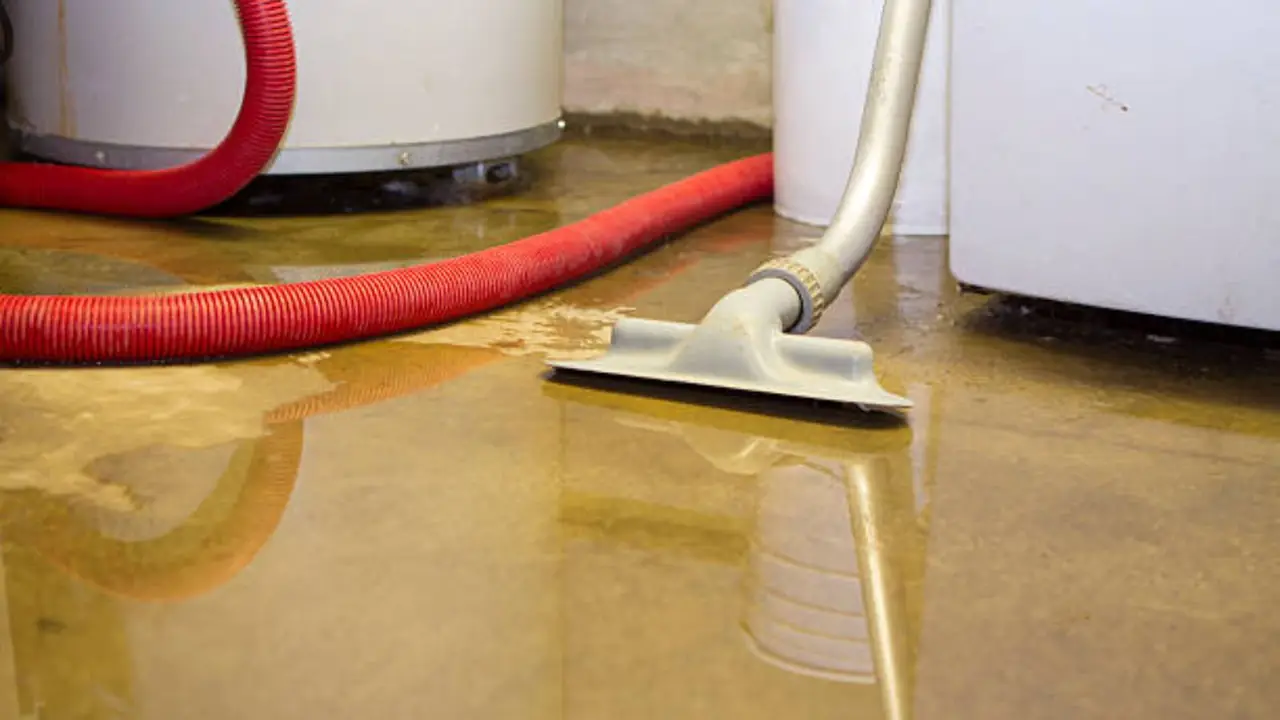
A refrigerator leak is usually slow, quiet and hidden. The water comes from the ice maker supply line, the defrost drain or the filter tubing, then runs under the toe-kick and spreads beneath the flooring long before a puddle shows in the kitchen. The cleanup that works is simple: stop the water, pull the unit, find how far the water traveled, and dry every wet layer before the subfloor holds moisture.
If water is actively running, call the 24/7 line now and read the steps below while you wait. If the leak stopped days ago and you only see a warped floor edge or a musty smell, the same steps apply, but the clock matters even more.
Where Refrigerator Water Actually Comes From
Most fridge leaks trace back to three parts. Knowing which one failed tells you how far the water likely traveled and what to check first.
- Ice maker or water dispenser supply line. A thin plastic or braided tube runs from a wall valve to the back of the unit. A cracked fitting or a kinked line can drip for weeks, and pressure at the valve keeps it going.
- Defrost drain. Frost melts into a drain that leads to a pan under the unit. A clogged drain sends that water into the cabinet base or onto the floor.
- Water filter housing. A loose or cross-threaded filter cartridge can weep at the connection, often at the front or the back panel.
Side-by-side units and French door models with water dispensers have more connections than a plain top-freezer. More connections mean more places for a slow drip to start.
First Steps When You Find Water
Do this before anything else
- Close the small shutoff valve behind or below the refrigerator. If you cannot reach it, close the main water valve for the house.
- Unplug the refrigerator only if the outlet and the floor around it are dry. If water touches the outlet or a power strip, stay out and call the utility or 911 before calling the restoration line.
- Move food to coolers and lift rugs, mats and cardboard off the floor.
- Photograph or video the water, the unit and the surrounding floor before you move anything. Keep damaged items until the adjuster has seen them.
- Call the 24/7 line so a crew can map where the water went.
Water is still spreading or you need an inspection? Call the 24/7 line and talk to a dispatcher now.
☎ (817) 623-9267What Has to Come Out and Why
Water from behind a refrigerator follows gravity and the path of least resistance. It slides under the toe-kick, wicks into the bottom of the cabinet boxes and drops into the gap between flooring and subfloor. You cannot judge the damage from the surface.
Pulling the refrigerator out is the first test. A moisture meter and a thermal camera then show wet areas behind finished surfaces. Wet particleboard cabinet bases swell and rarely return to shape, so they are often cut out. Wet baseboard and the lower strip of drywall are usually removed so air can reach the cavity.
| What is wet | What usually happens | Why |
|---|---|---|
| Toe-kick and cabinet base | Removed or detached for drying | Particleboard soaks up water and swells |
| Vinyl, tile or laminate flooring | Lifted at the edges or pulled, then the subfloor is checked | Water sits in the seams and under the planks |
| Hardwood flooring | Dried in place if caught early, replaced if cupped hard | Boards absorb from below and cup |
| Lower drywall and baseboard | Cut about 2 feet above the wet line, insulation removed | Wet paper facing and insulation hold moisture |
| Subfloor | Dried with directed air, replaced if soft | A subfloor that stays wet grows mold |
Drying Behind and Under the Kitchen
Drying is a measured process, not a fan in the corner. Air movers push dry air across the surface and under lifted flooring, and dehumidifiers pull the moisture out of the room so it does not just move to the next wall. A crew records moisture readings on day one and again each visit, then removes equipment only when the readings match a dry reference material.
Kitchens add a twist. Cabinets and the dishwasher space create sealed pockets, so small holes are often cut in the toe-kick to push air inside. Those holes are far cheaper to patch than a cabinet base that stays wet. The method is described under water damage cleanup, and a spreading leak that reaches the dining room calls for water mitigation as well.
Mold needs moisture. Drying quickly is the best way to keep a fridge leak from turning into a mold project later. The TDI warns that "Mold can start growing within a day after a leak," so a leak found on a weekend is still a same-day call.
Is a Refrigerator Leak Covered?
It depends on how the water got there. The Texas Department of Insurance says most homeowner and renter policies cover sudden and accidental water damage, such as a burst pipe or a broken washer hose. A supply line that fails and floods the kitchen in an afternoon often fits that description.
Gradual leaks and seepage are generally excluded, including any mold they cause. A drip that ran for weeks behind a refrigerator can land on the wrong side of that line. Read the exact wording in your policy and ask your insurer how it treats the loss before you decide what to repair.
Repair Steps After the Drying Is Done
Rebuilding starts after the readings are dry. Flooring is replaced or refinished, cabinet bases are rebuilt, drywall is patched and paint is matched. If the flooring runs through the kitchen into the hall, a transition is planned so the new material meets the old at a doorway instead of in the middle of a room. A kitchen with several wet layers can lean on water damage repair once drying is finished.
Replace the supply line with a braided stainless line while the unit is out. Check the shutoff valve for corrosion and replace it if it sticks. These two parts cost little next to the floor they protect.
Flower Mound note: document the loss for your insurer
The TDI advises you to photograph or video the damage before repairs, keep damaged items until the adjuster sees them, make temporary repairs to prevent more damage and keep the receipts, then hold off on permanent repairs until your insurer has seen the loss. In a kitchen that means saving the failed supply line or filter housing in a bag.
Our crews dispatch across Flower Mound, including the 75022 and 75028 ZIP codes, and the 24/7 line is the same for both. If your home is just across the line in Lewisville or out toward Grapevine, the same steps apply there. For the exact wording on your own coverage, ask your insurer.
Cost Factors for a Refrigerator Leak
No honest number exists until someone measures the damage. The main drivers are how long the leak ran, whether it reached the subfloor, how much flooring and cabinet base is wet, how many days of drying equipment the readings call for, and what rebuild scope follows. Call the line and the dispatcher explains how scope and price are set before work starts.
Frequently Asked Questions
Look for a soft or lifting floor near the refrigerator, a damp toe-kick, a musty smell or a warm patch on the floor. A moisture meter confirms it. Pulling the unit forward a few inches usually shows the wet path.
Unplug it only if the outlet, cord and floor around it are dry. If water reaches the outlet or a power strip, stay out and call the utility or 911 before you call the restoration line.
Mold needs moisture, and a hidden leak under cabinets gives it a place to grow if the area stays wet. Prompt drying is the best way to limit that risk. If you already see mold, read about mold remediation and note that Texas licensing rules apply to mold work.
Texas Department of Insurance guidance says sudden and accidental water damage is generally covered while gradual leaks are generally excluded. Your policy wording decides, so ask your insurer and keep photos and the failed part.
Yes. The line is open 24/7, and same-day response is offered when available. Close the shutoff valve and call, even if the leak looks small.
It can if the water travels under a shared subfloor or through an open doorway. Moisture readings in the adjoining room tell you whether drying needs to extend past the kitchen.