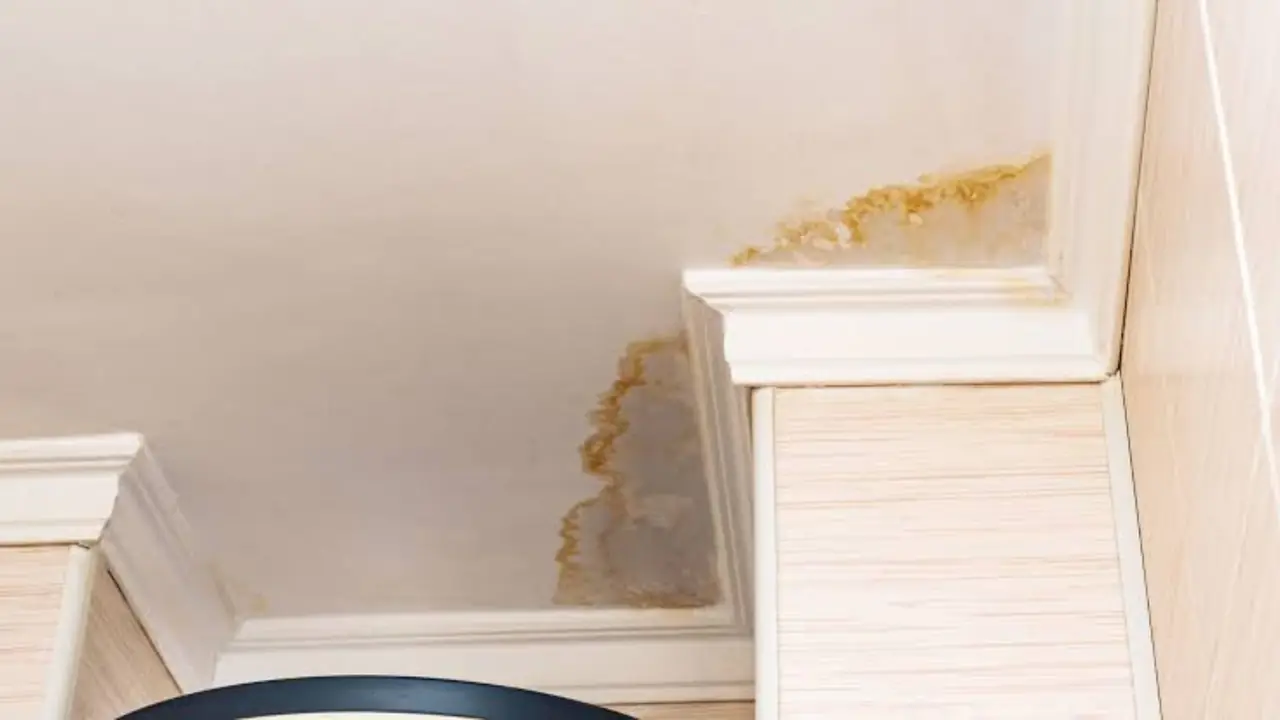
A professional ceiling repair after water damage includes drying, removing wet material, replacing drywall and insulation, finishing the surface, matching the texture and painting. The price changes with how much of the ceiling failed, how deep the damage runs and how hard the finish is to match.
If you are searching for ceiling repair after water damage or ceiling water damage restoration, the two terms describe the same job in two stages. Restoration dries and cleans, and repair rebuilds. Our water damage repair work covers the rebuild once drying is done.
What a professional scope includes
A written scope lists each task so you can compare quotes line by line. A good one reads in the order the work is done, from assessment to final paint.
- Assessment with a moisture meter and a thermal image to confirm the wet area and the source.
- Drying of the ceiling cavity and framing before anything is closed up.
- Removal of drywall that is sagging, stained through or soft.
- Removal and replacement of wet insulation above the ceiling.
- New drywall hung to joists, taped and finished with joint compound.
- Texture matched to the existing ceiling.
- Stain-blocking primer and paint carried to a natural break.
If the damage began as a leak that is still active, the plumber or roofer has to finish first. A ceiling that gets rebuilt under an active leak will fail again.
Patch or full panel?
The biggest cost question is whether a patch will do or a full panel has to come down. A patch costs less but leaves seams that may show under side light. A full panel from one wall to the next takes more material and labor, yet it hides the repair better.
| Situation | Likely scope | Why |
|---|---|---|
| Small stain, dry, firm | Prime and paint only | No structural damage to repair |
| Cracks or a small soft spot | Small patch and texture match | Localized damage, joists are sound |
| Large stain or sagging panel | Replace the affected sheet or sheets | Wet drywall has lost strength |
| Water traveled across the ceiling | Full panel replacement | Seams would show with a patch |
| Wet insulation above | Remove, dry and replace insulation | Insulation holds moisture and cannot be saved |
Cost factors that change the quote
No honest price can be named without looking at the ceiling. These are the factors that move a quote up or down, so you know what to ask about.
- Area affected: how many square feet of drywall come down and how many joists they span.
- Insulation: whether it is wet and has to be removed and replaced.
- Access: a finished attic or a tight crawlspace takes longer than an open attic.
- Texture: knockdown, popcorn or skip trowel, and how well the old finish can be matched.
- Paint: whether the stain stays in one corner or the whole ceiling has to be painted to blend.
- Water quality: clean water from a supply line differs from contaminated water, which means more material discarded.
Want a scope for a ceiling that is dry and ready to repair? Call the 24/7 line.
☎ (817) 623-9267Popcorn and textured ceilings
Popcorn and heavy textures take the most time to match. If a popcorn ceiling is older and has been painted many times, the new section may not blend even with careful work. Ask whether the quote includes a test patch or a full-ceiling texture to avoid a visible patch.
Do not scrape or remove a textured ceiling yourself without asking a professional about the age of the home. Older ceiling finishes can contain materials that need testing before disturbance, and a crew can tell you what is safe.
Questions to ask before you approve a scope
A short list of questions protects you from a repair that looks fine for a month and fails after the next leak. Ask each one before you sign anything, and expect plain answers.
- Was the ceiling cavity dried and checked with a moisture meter before it was closed?
- Is the wet insulation being removed and replaced, or only covered?
- How will the texture be matched, and will a test patch be done first?
- Is paint carried to a natural break, such as a wall line or a light fixture?
- Has the leak source been repaired and tested, and by whom?
A crew that answers these without hesitation has usually done the drying step properly, which is the part you cannot see once the ceiling is painted.
How the repair fits an insurance claim
The Texas Department of Insurance says most homeowner and renter policies cover sudden and accidental water damage, such as a burst pipe, toilet overflow or broken washer hose. Gradual leaks and seepage are generally excluded, including any mold they cause.
TDI advises photographing or video recording the damage before repairs, keeping damaged items until the adjuster sees them, and making temporary repairs to prevent further damage. Keep receipts. Hold off on permanent repairs until your insurer has seen the damage.
Ask your insurer which documents they need. A written scope with moisture readings and photos can help the adjuster understand the loss. Check your policy for your deductible, and do not assume what is covered before you ask.
Flower Mound note: permits and coverage ZIPs
Whether your ceiling repair needs a permit depends on the scope, especially when electrical, ductwork or plumbing is touched. Ask the Town of Flower Mound building department before you hire anyone, so the work does not stall later.
The 24/7 line covers ZIP codes 75022 and 75028 in Flower Mound, and the same crews dispatch to nearby towns. A dispatcher can confirm that your address is in range and explain the scope and price before work starts.
Homeowners in Lewisville and Grapevine can call the same line. For a ceiling that is still wet, water mitigation comes before any repair.
Frequently Asked Questions
It includes assessment, drying, removal of wet drywall and insulation, new drywall, finishing, texture matching and paint. The written scope should list each step.
By the area affected, insulation, attic access, the texture to match, paint and the water quality. A real number requires someone to look at the ceiling.
A patch works for small, dry, localized damage. If water spread across the ceiling or the panel sagged, a full panel hides the repair better.
TDI says most policies cover sudden and accidental water damage and generally exclude gradual leaks. Check your policy or ask your insurer, and keep photos and receipts.
Restoration dries and cleans the area, and repair rebuilds the drywall, texture and paint. Most jobs need both, in that order.
Yes, those ZIP codes are in the coverage area for Flower Mound. Call the 24/7 line and a dispatcher can confirm your address and explain scope and price before work starts.