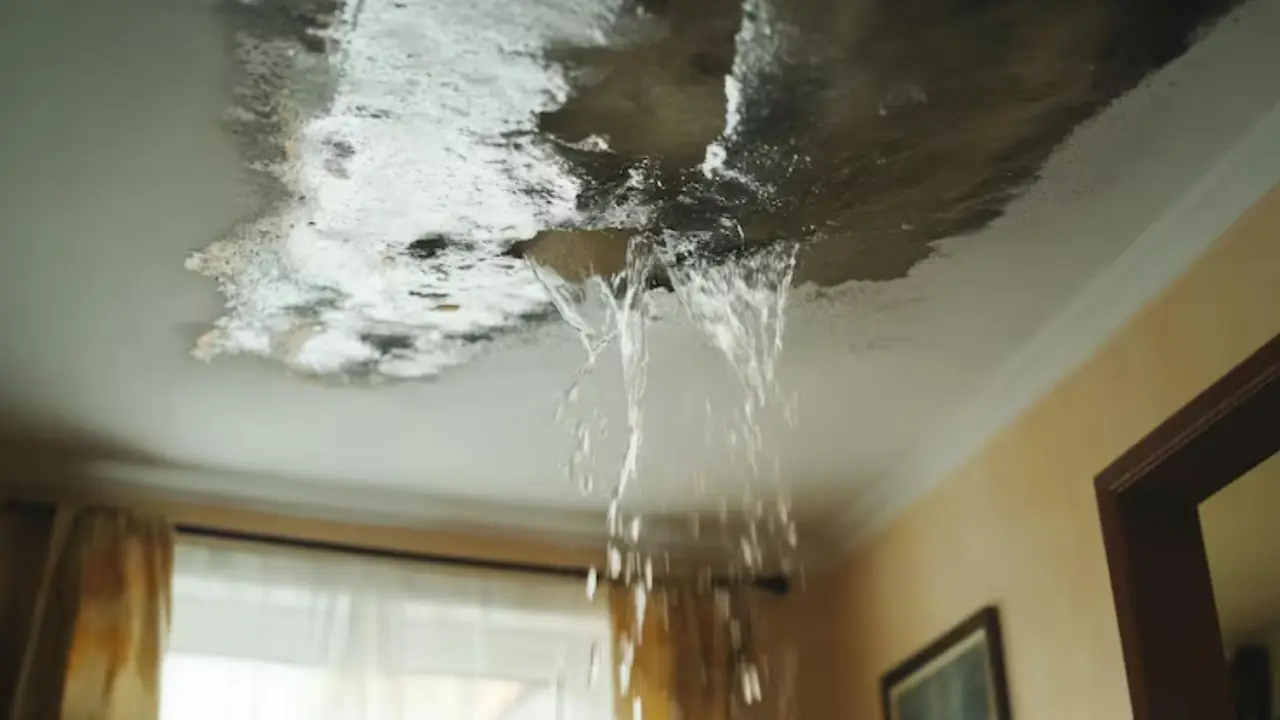
If a ceiling is dripping, sagging or bulging right now, treat it as an emergency. Stop the water at the source, keep people and pets out of the room, and call the 24/7 line. Water pooled above drywall can bring the panel down without warning, and wet ceilings can sit above live wiring.
The first hour is about three things: stopping the source, protecting people and limiting the water that is already above you. Our emergency water removal crews work the same sequence. Do these steps in this order, and skip anything that puts you under a sagging panel.
Safety first: electricity and a falling ceiling
If water is near a light fixture, a ceiling fan, an outlet, a panel or an appliance, stay out of the room. Cut power at the breaker only if you can reach the panel while standing on a dry floor. If you cannot, call the utility or 911 about the electrical risk before you call the restoration line.
Never stand directly under a sagging, cracked or bulging panel. A wet drywall ceiling can weigh far more than it looks, and a bulge means water is pooled behind it.
The first hour, step by step
- Find and stop the source if it is safe. Upstairs plumbing, a dishwasher or washing machine, a water heater and an attic line are the usual suspects. If you cannot tell, shut off the main water valve.
- Keep everyone out from under the damaged area. Close the door to the room if it helps.
- Move furniture, electronics and anything valuable out of the drip zone. Cover what cannot be moved with plastic.
- Set buckets or trash cans under active drips. Move them as the drips move.
- Photograph or video the ceiling, the stain and any bulge from a safe angle before anything changes.
- Call the 24/7 line. Describe where the water is, whether it is still dripping and whether power is involved.
Most of what follows depends on how quickly the source is stopped. If the leak is a supply line, the main valve ends it. If it is rain through a roof, you cannot stop the water but you can limit what reaches the room below.
Should I puncture a bulging ceiling?
A bulge is trapped water, and releasing it can prevent a sudden collapse. But puncturing a ceiling is only safe when the area is clear of electrical fixtures, the water is clean and you can stand to the side with a bucket and a tool at arm length.
Make one small hole at the lowest point of the bulge, stand to the side, and let the water run into the bucket. Do not enlarge it. If there is any chance the water contains sewage, a fixture is nearby or the ceiling is cracked, leave it and wait for the crew.
| What you see | How urgent | What to do |
|---|---|---|
| Slow drip into a bucket | Urgent | Stop the source, set buckets, call the 24/7 line |
| Dark stain growing quickly | Urgent | Shut off the main valve and keep the room clear |
| Bulge or sag in the panel | Emergency | Stay out from under it, consider one safe relief hole, call now |
| Water near lights or outlets | Emergency | Stay out, call the utility or 911 first, then the restoration line |
| Brown, smelly water | Emergency | Avoid contact and call, since it may be contaminated |
What a crew does once it arrives
The crew starts by finding where the water is, not only where it shows. A moisture meter and a thermal camera map the wet area, which is often larger than the visible stain. Then wet drywall that has sagged or softened is removed so it cannot fall, and standing water is extracted.
Air movers and dehumidifiers go in to dry the framing and any remaining insulation. If the attic is involved, wet insulation comes out too. Once the area reads dry, water damage repair rebuilds the ceiling, with texture and paint to match.
Ceiling sagging or dripping right now? Call the 24/7 emergency line.
☎ (817) 623-9267When a ceiling is likely to fall
A ceiling may fall when it has been soaked for hours, when a bulge has formed, when cracks run across the panel or when the paint has begun to separate in sheets. Heavy insulation above adds weight, and screws can pull through wet drywall.
Never test a questionable ceiling by pressing or poking it from below. If you must check, look from the doorway. Keep a clear path out and keep children and pets away until a crew has made the area safe.
After the emergency: insurance and documentation
The Texas Department of Insurance says most home policies cover sudden and accidental water damage, such as a burst pipe or broken washer hose, and generally exclude gradual leaks. TDI also advises shutting off the water, removing standing water and moving wet items to a dry place.
Photograph the ceiling before repairs and keep damaged items until the adjuster sees them. Check your policy or ask your insurer how to report it. The crew can document moisture readings that support your claim.
Flower Mound note: rain, freezes and ceiling leaks
The National Weather Service Fort Worth lists a 37.01-inch annual precipitation normal for Dallas/Fort Worth (1991-2020). Roofs, flashing and attic lines get tested every year, so a ceiling stain after heavy rain is worth tracing to the roof before you blame plumbing.
The same office reports that DFW had 93 hours at or below freezing from February 9 to 13, 2021 and another 139 hours from February 13 to 19. Long freezes stress attic and upper-floor supply lines, so after a hard freeze, check ceilings below those lines when temperatures rise.
Crews also dispatch to Lewisville and Grapevine on the same line.
Frequently Asked Questions
Stop the source if it is safe, usually by shutting off the main water valve. Keep everyone out from under the damaged area, set buckets and move valuables, then call the 24/7 line.
Only if you can reach the panel while standing on a dry floor. If water is near fixtures or outlets and you cannot reach the panel safely, stay out and call the utility or 911 first.
Only when the area is clear of fixtures, the water is clean and you can stand to the side. Make one small hole at the lowest point. If there is any doubt, leave it for the crew.
It can. Ceilings that have bulged, cracked or soaked for hours are at risk, and heavy insulation adds weight. Never stand under a sagging panel.
Yes. The line is open 24/7, including nights and weekends. Same-day response is offered when available, and a dispatcher explains the scope and price before work starts.
TDI says most policies cover sudden and accidental water damage and generally exclude gradual leaks. Check your policy, photograph the damage and keep damaged items until the adjuster sees them.