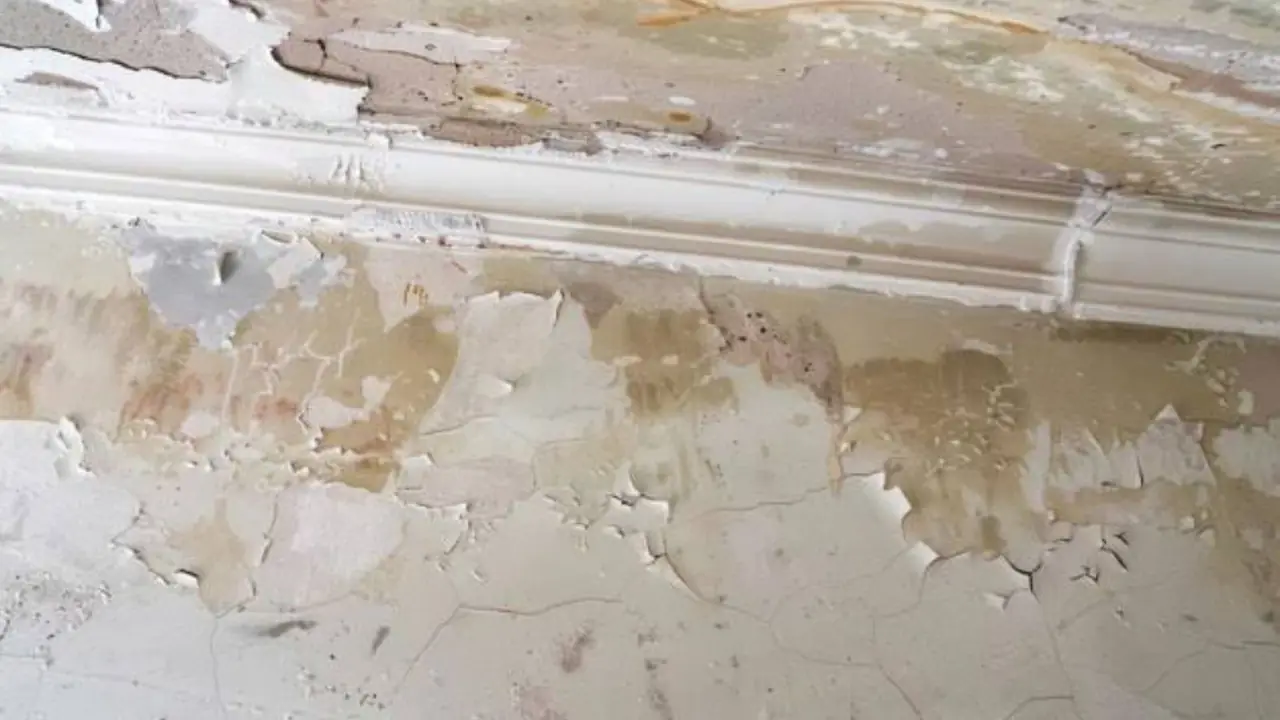
A water damaged wall is repaired in a set order: confirm it is dry, cut out what failed, replace insulation if needed, hang new drywall, tape and finish, match the texture, then prime and paint. Skipping the drying check is the one shortcut that costs the most, because paint over a wet wall peels and invites mold.
Most of the labor lives in the finishing, not the cutting. A patch that looks invisible depends on feathered joints, matching texture and a coat of paint carried to a natural break. This guide walks through each step so you can judge a quote. Our water damage repair page covers the rebuild side of a job.
Step 1: confirm the wall is actually dry
Repair only starts after drying. A moisture meter reading on the studs and the remaining drywall should match a dry reference wall, and the reading should hold steady over two visits. A wall can feel dry to the hand while the bottom plate still holds moisture.
If the drying stage is not finished, water mitigation comes first. Closing up a wall too early traps moisture against framing and is the most common reason a repair fails within months.
Step 2: decide what to replace
Not every damaged wall needs new drywall. Light staining on dry, firm drywall can often be sealed and repainted. Drywall that has swelled, crumbled, split at the seams or kept a soft spot after drying should come out.
| Condition after drying | Usual decision | Why |
|---|---|---|
| Faint stain, firm and dry | Seal and repaint | The paper is intact and the core is solid |
| Bubbled paint, firm underneath | Scrape, prime and repaint | Surface failure only, once moisture is confirmed gone |
| Swollen or soft drywall | Cut out and replace | The gypsum core has lost strength |
| Wet or stained insulation | Remove and replace | Insulation holds moisture and does not recover |
| Warped or stained baseboard | Replace the trim | Swelled trim will not reseat flat |
Step 3: cut lines, studs and insulation
Cut lines should land on a stud so the new panel has something to screw into. A crew often cuts a rectangle above the wet line, extends it to the nearest stud on each side, and removes the damaged section. A straight, stud-to-stud cut is easier to finish than a ragged patch.
Behind the drywall, the crew looks at the framing and the insulation. Wet insulation comes out and is replaced once the cavity is dry. Studs and the bottom plate are checked again with a meter. If anything is darkened or soft, it gets flagged before new drywall closes the opening.
A quick checklist before new drywall goes up
- Framing reads dry on a moisture meter, matching a dry reference wall.
- The leak source is fixed and tested, not just stopped for the day.
- Wet insulation is removed and replaced, not left in place.
- Any darkened or soft framing has been looked at and cleared.
- The wall cavity is clean and free of debris.
Step 4: hang, tape and finish
New drywall is screwed to the studs, taped at the seams and covered with joint compound. Most walls need two or three coats, each sanded once dry, so the patch disappears into the wall. Drying time between coats is why a small repair can span several days.
Thicker drywall or a moisture-resistant panel can make sense near a tub, a shower or a laundry hookup. Ask what type of board the quote includes and why. The cost difference is small compared with redoing the same wall after another leak.
Step 5: match the texture, prime and paint
Texture is where patches usually show. Knockdown, orange peel and skip trowel all need a matching technique, and the new area has to blend into the old one. A skilled finisher will test the spray or hand texture on scrap board before touching the wall.
Stain-blocking primer goes on before the final coats, so old water marks do not bleed through the paint. Paint is usually carried to a corner or natural break, rather than stopping mid-wall, because a fresh patch on old paint will show under side light.
Want a scope for a wall that is already dry? Call the 24/7 line and ask for an assessment.
☎ (817) 623-9267What drives the cost of a wall repair
Wall repair prices do not come from one number. Five factors move the quote more than anything else, and a good estimate explains each of them before work starts.
- Size of the removed area, measured in how much drywall comes out and how many studs it spans.
- Whether insulation, trim or electrical outlets need to be removed and replaced.
- The type of texture and how hard it is to match.
- Paint, including whether a full wall or a full room has to be painted to blend.
- Whether the water was clean or contaminated, which changes what must be discarded.
No honest quote can be given without seeing the wall. If you want a real number, call the 24/7 line and have the scope explained before work starts.
Where insurance fits in
The Texas Department of Insurance says most policies cover sudden and accidental water damage and that gradual leaks are generally excluded. Check your policy or ask your insurer before permanent repairs begin. TDI advises waiting on permanent repairs until the insurer has seen the damage.
Flower Mound note: permits and temporary repairs
Permit rules for drywall, electrical and plumbing work vary with the scope of the job. Ask the Town of Flower Mound building department whether your repair needs a permit before you hire anyone, especially if outlets or plumbing are touched.
TDI also advises making temporary repairs to prevent more damage and keeping receipts. In practice that means tarping, shutting off water and drying, then saving the paperwork for your adjuster before the new drywall goes up.
The same crews work homes in Lewisville, Argyle and Grapevine on the same 24/7 line, so a repair scope is a call away.
Frequently Asked Questions
Drying comes first and can take several days. Repair itself spans taping, sanding, texture, primer and paint, with drying time between coats. A small patch often takes several days overall because each layer must dry.
Only after the wall is confirmed dry and the source is fixed. Use a stain-blocking primer first. Paint over a wet wall will peel, and the stain may bleed back through a regular coat.
Wet insulation usually has to go. It holds moisture against the framing and does not return to its original shape. A crew replaces it after the cavity dries and the framing reads dry.
It can. Matching texture and carrying paint to a natural break are what make a patch disappear. Ask the finisher how they will match the texture before work begins.
TDI says most policies cover sudden and accidental water damage and generally exclude gradual leaks. Check your policy, photograph the damage and keep receipts for temporary repairs.
Permit rules vary by the work involved. Ask the Town of Flower Mound building department before the job, especially if electrical or plumbing work is part of the repair.